Tuesday, October 28, 2008

BEZALEL


I recently decided that it was about time for me to begin posting and sorting the various works of art which I deem to be the best. This is an on-going process which I will continue to update as I recall and am introduced to those works of art which are the sublime pinnacle of man’s ability to create like his creator.

[I'm working to update this monster of a project. Bear with me.]

Songs/Recordings

Airbag – Radiohead
Albinoni Adagio G Minor – Remo Giazotto
All Along the Watchtower – Jimi Hendrix
All Apologies - Nirvana
All Summer Long - The Beach Boys
Also sprach Zarathustra – Richard Strauss
Amazing Grace – John Newton
American Pie – Don McLean
Ashes to Ashes – David Bowie
Bachelorette – Bjork
The Barber of Seville Overture – Gioachino Rossini
Barnyard - Brian Wilson
Being For the Benefit of Mr. Kite – The Beatles
The Blue Danube - Johann Strauss II
Brandenburg Concerto Allegro No. 2 in F Major – Johann Sebastian Bach
Brandenburg Concerto Allegros No. 3 in G Major - Johann Sebastian Bach
Brandenburg Concerto Allegro No. 6 in B Flat - Johann Sebastian Bach
Cabin Essence - Brian Wilson
China Girl – David Bowie
Cold Brains – Beck
Concerto in F – George Gershwin
Coronation Mass in C Major K.317 - Wolfgang Mozart
Così fan tutte, opera, K. 588 Act 1. Aria. Un' aura amorosa - Wolfgang Mozart
Creeque Alley – The Mamas and the Papas
Danse Macabre – Camille Saint-saens
A Day in the Life – The Beatles
Deadweight – Beck
Dollars & Cents - Radiohead
Don Giovanni, opera, K. 527 Finale - Wolfgang Mozart
Don Giovanni, opera, K. 527 Lasciala, Indegno! (Moonlight Trio) - Wolfgang Mozart
Don Giovanni, opera, K. 527Overture - Wolfgang Mozart
Don't Let It Bring You Down– Paul McCartney and Wings
Drive - REM
Emergency Exit – Beck
The End – The Doors
Die Entführung aus dem Serail, opera, K. 384 Act 2. Aria. Martern aller Arten - Wolfgang Mozart
Esther – Phish
Fantasia on a Theme by Thomas Tallis, for 2 string orchestras - Ralph Vaughan Williams
Fee - Phish
Fire Water Burn - The Bloodhound Gang
Flaming – Pink Floyd
Girl Don't Tell Me - The Beach Boys
The Godfather Waltz – Nino Rota
God Only Knows - Brian Wilson/The Beach Boys
Going to California - Led Zeppelin
Grantchester Meadows - Pink Floyd
Guyute - Phish
Hello - Lionel Richie
Heroes and Villains – The Beach Boys
Hot Wax – Beck
Hunter – Bjork
I Got Plenty o' Nuttin' - George Gershwin
The Imperial March – John Williams
I Only Have Eyes For You - The Flamingos
It Ain't Necessarily So - George Gershwin
“Jupiter” Symphony No. 41 in C major K. 551 1. Allegro vivace - Wolfgang Mozart
Late Home Tonight Pt. 1 – Roger Waters
Lather – Jefferson Airplane
Laudate Dominum (from Vesperae solennes de confessore for soloists, chorus & orchestra), K. 339 - Wolfgang Mozart
Lara's Theme – Maurice Jarre
Lawrence of Arabia (Main Theme) – Maurice Jarre
Like a Rolling Stone – Bob Dylan
Linus and Lucy – Vince Guaraldi
Lola – The Kinks
The Longest Time - Billy Joel
Lord Only Knows – Beck
Loser – Beck
Lucky Man - ELP
Mary Jane’s Last Dance – Tom Petty and the Heart Breakers
A Mighty Fortress is Our God – Martin Luther
Monday, Monday - The Mamas and the Papas
Moonlight Sonata – Ludwig van Beethoven
Mrs. Robinson - Simon and Garfunkle
My Life - Billy Joel
Nadia’s Theme - by Barry De Vorzon and Perry Botkin, Jr.
The National Anthem - Radiohead
Le nozze di Figaro, opera, K. 492 Overture - Wolfgang Mozart
The Ocean – Led Zeppelin
Otto e Mezzo – Nino Rota
Paranoid Android – Radiohead
“Paris” Symphony No. 31 in D major K. 297 (K. 300a) 1st movement - Wolfgang Mozart
Pay No Mind – Beck
Peaches in Regalia – Frank Zappa
Piano Concerto No. 21 in C Major K.467 - Wolfgang Mozart
Piano Sonata No. 12 in F major, K. 332 (K. 300k) 2. Adagio - Wolfgang Mozart
Piggies – The Beatles
Prelude #2 - George Gershwin
Professor Nutbutter's House of Treats - Primus
Rape Me - Nirvana
Rhapsody in Blue – George Gershwin
Rocket Man – Elton John
Runaway - Del Shannon
Scarborough Fair - Simon and Garfunkle
Der Schauspieldirektor, opera, K. 486 Overture - Wolfgang Mozart
Selfless, Cold and Composed – Ben Folds/Five
Serenade No. 10 for winds in B flat Minor - Wolfgang Mozart
Several Species of Small Furry Animals Gathered Together in a Cave and Grooving with a Pict – Pink Floyd
Something - The Beatles
Space Oddity - David Bowie
Strawberry Fields Forever – The Beatles
Suite for solo cello No. 1 in G major, BWV 1007 Prelude - Johann Sebastian Bach
Summertime - George Gershwin
Symphony No. 25 in G minor, K. 183 – Wolfgang Mozart
Tales from the Vienna Woods - Johann Strauss II
Tangled Up in Blue – Bob Dylan
That’s the Way – Led Zeppelin
The Thieving Magpie – Gioachino Rossini
Truck Driving Neighbors – Beck
Uncle Albert/Admiral Halsey – Paul McCartney
Vega-Tables – Brian Wilson/The Beach Boys
Violin Concerto No. 3 in G Major K. 216 3rd Movement - Wolfgang Mozart
Violin Concerto No. 5 in A Major K.219– Wolfgang Mozart
"Waisenhausmesse" Mass No. 4 for soloists, chorus & orchestra in C minor - Wolfgang Mozart
Waltz 2 from Suite for Variety Stage Orchestra - Dmitri Shostakovich
When the Levee Breaks - Led Zeppelin
Where It’s At – Beck
White Rabbit – Jefferson Airplane
Who Are You – The Who
A Woman is a Sometime Thing - George Gershwin
Won’t Get Fooled Again – The Who
“Wynona” – Primus
Yesterday - The Beatles
Die Zauberflöte, opera, K. 620 Aria. Der Hölle Rache kocht in meinem Herzen - Wolfgang Mozart


Albums/Works

Abbey Road – The Beatles
Amnesiac - Radiohead
The Bends – Radiohead
Bigger Better Faster More – 4 Non Blondes
The Brandenburg Concertos - Johann Sebastian Bach
The Dark Side of the Moon – Pink Floyd
Don Giovanni - Wolfgang Mozart
Fragile - Yes
Freak Out – Frank Zappa
“Gamehenge” – Phish
Goldberg Variations - Johann Sebastian Bach
Houses of the Holy – Led Zeppelin
Junta - Phish
Kid A – Radiohead
”Lifehouse”/Who’s Next – The Who
London Town – Paul McCartney and Wings
“The Man and the Journey” - Pink Floyd
Mellon Collie and the Infinite Sadness – Smashing Pumpkins
Mellow Gold – Beck
Mutations – Beck
Odelay - Beck
OK Computer - Radiohead
Pet Sounds – The Beach Boys
Peter and the Wolf - Sergei Prokofiev
The Piper at the Gates of Dawn – Pink Floyd
Porgy and Bess – George Gershwin
The Pros and Cons of Hitch Hiking – Roger Waters
Purple – Stone Temple Pilots
Quadrophenia – The Who
Revolver – The Beatles
Rift - Phish
Der Ring des Nibelungen – Richard Wagner
Sgt. Peppers Lonely Hearts Club Band - The Beatles
“Smile” – Brian Wilson/Beach Boys
Tommy – The Who
The Wall – Pink Floyd
“White Album” – The Beatles
Ziggy Stardust and the Spiders From Mars - David Bowie


Plays

Arcadia – Tom Stoppard
Endgame – Samuel Beckett
Hamlet – William Shakespeare
Henry IV Part 1 and Henry IV Part 2 – William Shakespeare
The Importance of Being Ernest – Oscar Wilde
King Lear - William Shakespeare
MacBeth - William Shakespeare
A Midsummer Night’s Dream – William Shakespeare
Oedipus Rex – Sophocles
On the Razzle – Tom Stoppard
Romeo and Juliet - William Shakespeare
Rosencrantz and Guildenstern are Dead - Tom Stoppard
Waiting for Godot – Samuel Beckett


Poems

The Bells - Edgar Poe
Break, Break, Break – Alfred Lord Tennyson
Child Roland to the Dark Tower Came – Robert Browning
Dover Beach – Matthew Arnold
Four Quartets - T. S. Elliot
I Wandered Lonely as a Cloud – William Wordsworth
Jabberwocky – Lewis Carroll
The Kraken - Alfred Tennyson
Kubla Khan – Samuel Coleridge
The Love Song of J. Alfred Prufrock – T. S. Elliot
Meditation XVII - John Donne
Ode on a Grecian Urn – John Keats
Paul Revere's Ride - Henry Wadsworth Longfellow
Poem 761 – Emily Dickenson
The Raven - Edgar Poe
Sailing to Byzantium - W.B. Yeats
The Second Coming – W.B. Yeats
She Walks in Beauty – Lord Byron
The Song of Hiawatha - Henry Wadsworth Longfellow
Ulysses – Alfred Lord Tennyson
The Walrus and the Carpenter - Lewis Carroll
The Waste Land - T. S. Elliot
The Wife of Bath – Geoffrey Chaucer


Children’s Books

Alice in Wonderland - Lewis Carroll
Grimm's Fairy Tales – Jacob and Wilhelm Grimm
The Lion, the Witch,and the Wardrobe – C. S. Lewis
Peter Pan – J. M. Barrie
The Silver Chair – C. S. Lewis
Through the Looking Glass - Lewis Carroll
The Wind in the Willows – Kenneth Grahame
The Wizard of Oz – L. Frank Baum


Religious Books/Works

The Apocalypse of John – John
Deutero-Isaiah [40-66]
Ecclesiastes – Qoheleth
The Book of J – J Writer
The Gospel of John - John
Jonah
Luke-Acts – Luke
The Gospel of Mark - Mark
Psalm 8
Psalm 22
Psalm 23
Psalm 42
Psalm 104
Psalm 110
Psalm 119
Psalm 137
Psalm 139
The Book of Samuel
The Sermon on the Mount (Matt 5-7)
Song of Songs 1:1-7
Stephen's Speech (Acts 7:1-53)


Novels/Works

The Aeneid – Virgil
Amerika – Franz Kafka
Animal Farm – George Orwell
Before the Law – Franz Kafka
Beowulf
The Book of One Thousand and One Nights
Brave New World – Aldous Huxley
The Brothers Karamazov - Dostoyevsky
The Canterbury Tales – Geoffrey Chaucer
The Cantos - Ezra Pound
The Castle - Franz Kafka
A Clockwork Orange – Anthony Burgess
Crime and Punishment – Fyodor Dostoyevsky
The Dark Tower Series – Stephen King
The Decameron - Giovanni Boccaccio
The Divine Comedy – Alighieri Dante
Don Quixote – Miguel Cervantes
Epic of Gilgamesh
Faust – Johann Goethe
Finnegans Wake – James Joyce
Gargantua and Pantagruel – Francois Rabelais
Gawain and the Green Knight – The Pearl Poet
Gulliver’s Travels – Jonathan Swift
Iliad - Homer
In Search of Lost Time – Marcel Proust
The Last Temptation - Nikos Kazantzakis
Leaves of Grass – Walt Whitman
Lolita – Vladimir Nabokov
Lord of the Rings/Addendums – J.R.R. Tolkien
Metamorphoses - Ovid
Moby Dick – Herman Melville
The Murders in the Rue Morgue – Edgar Poe
The Name of the Rose – Umberto Eco
Nineteen Eighty-Four – George Orwell
Odyssey - Homer
The Odyssey: A Modern Sequel - Nikos Kazantzakis
Paradise Lost – John Milton
Poetic Edda
A Portrait of the Artist as a Young Man – James Joyce
Pride and Prejudice – Jane Austen
Prose Edda – Snorri Sturluson
The Ring and the Book – Robert Browning
Rip Van Winkle – Washington Irving
The Sign of Four – Arthur Conan Doyle
A Tale of Two Cities – Charles Dickens
The Trial – Franz Kafka
Tristram Shandy – Lawrence Sterne
Ulysses – James Joyce


Films

8 ½ - Federico Fellini
2001: A Space Odyssey – Stanley Kubrick
Amadeus – Milos Forman
Animal Crackers – The Marx Brothers
Brazil – Terry Gilliam
Casablanca – Michael Curtiz
Children of Paradise - Marcel Carne
Chimes at Midnight - Orson Welles
Citizen Kane – Orson Welles
The City of Lost Children – Jean-Pierre Jeunet
A Clockwork Orange - Stanley Kubrick
Contact - Robert Zemeckis
La Dolce Vita - Federico Fellini
Dr. Strangelove – Stanley Kubrick
Duck Soup – The Marx Brothers
The Godfather - Francis Ford Coppola
Grand Illusion – Jean Renoir
Groundhogs Day – Harold Ramis
Lawrence of Arabia – David Lean
M - Fritz Lang
Manhattan – Woody Allen
Master and Commander: The Far Side of the World – Peter Weir
Metropolis – Fritz Lang
The Polar Express – Robert Zemeckis
Ran - Akira Kurosawa
The Rules of the Game – Jean Renoir
The Seventh Seal – Ingmar Bergman
The Shawshank Redemption – Frank Darabont
Spirited Away - Hayao Miyazaki
The Trial - Orson Welles
The Truman Show – Peter Weir


Sitcoms

Absolutely Fabulous
The Andy Griffith Show
Are You Being Served?
Black Adder
Coupling
The Fall and Rise Reginald Perrin
Fawlty Towers
The Good Life
Green Acres
The Honeymooners
I Love Lucy
The Jack Benny Program
Night Court
Red Dwarf
Seinfeld
Soap
Taxi
Up Pompeii!
The Vicar of Dibley
Yes, Minister/Prime Minister
The Young Ones


Art

36 Views of Mount Fuji - Katsushika Hokusai
Alice in Wonderland/Through the Looking Glass – John Tenniel
The Anatomy Lesson of Dr. Nicolaes Tulp - Rembrandt van Rijn
The Apotheosis of Homer - Salvador Dali
Apparition of Face and Fruit Dish - Salvador Dali
Les Arènes - Vincent van Gogh
Le Baiser – Auguste Rodin
Bedroom at Arles - Vincent van Gogh
Les Bourgeois de Calais – Auguste Rodin
Broadway Boogie-Woogie – Piet Mondrian
The Burial of Count Orgaz - El Greco
The Café Terrace on the Place du Forum, Arles, at Night - Vincent van Gogh
Sistine Chapel Ceiling – Michelangelo
La Chateau des Pyrenees – Rene Magritte
Christ Carrying the Cross (1515-1516) – Hieronymus Bosch
The Church at Auvers - Vincent van Gogh
The Colossus - Francisco Goya
Compositions – Piet Mondrian
Les Demoiselles d'Avignon - Pueblo Picasso
Un dimanche après-midi à l'Ile de la Grande Jatte – Georges-Pierre Seurat
The Discovery of America by Christopher Columbus - Salvador Dali
The Disintegration of the Persistence of Memory – Salvador Dali
Don Quixote - Pueblo Picasso
Fear And Loathing In Las Vegas – Ralph Steadman
Freedom From Want – Norman Rockwell
The Garden of Earthly Delights – Hieronymus Bosch
The Gates of Hell – Auguste Rodin
Geopoliticus - Salvador Dali
Geopoliticus Child - Salvador Dali
Girafe en Fue - Salvador Dali
Girl with a Pearl Earring – Jan Vermeer
Golconde – Rene Magritte
Gossip – Norman Rockwell
Les Grandes Baigneuses – Paul Cezanne
The Great Mxxxxxxxxxr – Salvador Dali
Guernica - Pueblo Picasso
The Hallucinogenic Toreador – Salvador Dali
Hand with Globe – M.C. Escher
Homecoming G.I. – Norman Rockwell
I and the Village – Marc Chagall
Jacob Wrestling with the Angel - Gustave Dore
The Kiss – Gustav Klimt
Lady Godiva – John Collier
Landscape with Olive Trees - Vincent van Gogh
The Last Judgment – Hieronymus Bosch
The Last Judgment – Michelangelo
The Lascaux Cave Paintings
Marriage License – Norman Rockwell
The Metamorphosis of Narcissus – Salvador Dali
The Night Café - Vincent van Gogh
Nude Descending a Staircase, No. 2 – Marcel Duchamp
The Old Guitarist - Pueblo Picasso
Olive Grove - Vincent van Gogh
Olive Orchard - Vincent van Gogh
The Olive Trees – Vincent van Gogh
Pieta – Michelangelo
Le Penseur – Auguste Rodin
The Persistence of Memory – Salvador Dali
Le Pont Japonais a Giverny – Claude Monet
Portrait of Adele Bloch-Bauer I - Gustav Klimt
Relativity - M.C. Escher
The Road - Vincent van Gogh
The Roadblock - Norman Rockwell
Saint Peter Denying Christ - Rembrandt van Rijn
Saturn Devouring His Son – Francisco Goya
Saying Grace – Norman Rockwell
The Scream – Edvard Munch
Self-Portrait as St. Paul - Rembrandt van Rijn
The Slave Market with Disappearing Bust of Voltaire – Salvador Dali
Soft Construction with Boiled Beans (Premonition of Civil War) – Salvador Dali
The Son of Man – Rene Magritte
The Starry Night - Vincent van Gogh
Still Life Moving Fast - Salvador Dali
Still Life with Apples and Oranges – Paul Cezanne
Still Life with Two Sunflowers - Vincent van Gogh
Sting Caused by the Flight of a Bee - Salvador Dali
Sunflowers - Vincent van Gogh
Swans Reflecting Elephants - Salvador Dali
The Temptation of St. Anthony – Hieronymus Bosch
Temptation of St. Anthony – Salvador Dali
Triple Self Portrait - Norman Rockwell
Tuna Fishing - Salvador Dali
Two Cut Sunflowers - Vincent van Gogh
University Club – Norman Rockwell
Vitruvian Man – Leonardo da Vinci
Walking to Church – Norman Rockwell
Where the Wilds Things Are – Maurice Sendak


Theological Works

Axioms of Religion – E.Y. Mullins
The Baptist Heritage – Leon McBeth
The Christian Religion in its Doctrinal Expression – E.Y. Mullins
The Concept of Anxiety – Soren Kierkegaard
Concluding Unscientific Postscript - Soren Kierkegaard
Cost of Discipleship – Dietrich Bonhoeffer
Dogmatics – Emil Brunner
Either/Or – Soren Kierkegaard
The Epistle to the Romans – Karl Barth
Fear and Trembling – Soren Kierkegaard
Mere Christianity – C. S. Lewis
Nature and Destiny of Man – Reinhold Niebuhr
On Being Christian – Hans Kung
Philosophical Fragments – Soren Kierkegaard
The Sickness Unto Death – Soren Kierkegaard
Transforming Mission – David Bosch
Understanding Genesis – Nahum Sarna
Word of Truth – Dale Moody
Works of Love – Soren Kierkegaard

AKEDAH


I recently decided that it was about time for me to begin collecting and sorting many of my various monographs. Specifically, I want to focus on those which involve the Faith and Literature and which reflect my attempts at understanding what we are to know and what we are to do.


ESSAYS

Translating the Gospel

So Far ... What is it about Mormonism that prevents its followers from having salvation in Christ?

What is it about Mormonism that prevents its followers from having salvation in Christ?

Egalitarianism, Evolution and Abortion

Scripture Interprets Scripture: Annihilationism, Non-Penal Substitutionary Atonement and a Multiple Choice Question To Keep You Up Tonight

Inerrancy and Textual Variatians in the Scriptures

On the Death of Animals

Stumbling Blocks for the Glory of God

Global Warming

Another Reason to Understand the Adam of Genesis 1 and 2-3 as Being Figurative and A-historical

JESUS WAS NOT PUNISHED BY GOD FOR THE SINS OF HUMANITY

Loving Those You’ll Never Know

ONLY WARREN CAN GO TO NORTH KOREA

The Ethics of the Sermon on the Mount

The Man-made Argument for "Man made in the Image of God": An Argument Against the Complementarian View of God (Made by a Man Who Has It Made as a Man

DO NOT FORBID SPEAKING IN TONGUES (1 Cor 14:39)

The Problem With The Baptist Faith and Message

To You Who Attempt To Force Others To Adopt Your Traditions: YOU AND YOUR TRADITIONS ARE NOT ABOVE SCRIPTURE OR JESUS CHRIST.

Inerrancy and the Historical Veracity of Literary Scripture

Alcohol and Vacillating to the World

The Use of the Word "Sinner"

The Traditions of Men and the Meaning of Scripture

Narrowing Doctrinal Parameters

A Thought on Contemporary and Traditional Worship

Justice, Mercy and Punishment: A Sermon on Genesis 4:2b-16 on the Occasion of the 5th Anniversary of September 11th

Should Women Teach Men At Church?

The Problem With Penal Substitionary Atonement

Man From Mud Thru Mammals: The Value of Man Amidst Evolutionary Theory

Open vs Closed Communion, or "You're Not Worthy!"

To the Seminary Student Interested in SBC Politics:

Seven Observations Concerning Alcohol Abstinence

Oinos: Yes, It Actually Means "Wine"

Hubris In The Pulpits: 14 Problems With Advocating Complete Abstinence Of Alcohol Consumption

The Character and Motives of Judas Iscariot

There's A Slow Train A'comin': Truth and Patience Against Christian Cultural Dogmatism

The Inheritors

Paradigm Shifts, Modern Psychology and Nouthetic Counseling

“One” Man And “One” Woman?

The Dissent of Man: Where We Currently Stand With Regards To The Conservative Resurgence

The Dissent of Man: Cliff Notes Version

A Review of Love Your God With All Your Mind: The Role of Reason in the Life of the Soul, by J. P. Moreland.

Soul Competency, Baptist Revisionism, and Inerrancy

Inerrant Art

Who Adam and Eve Were

The Textual Evidence For Jacob Wrestling An Elohiym

"Private Prayer Language" And Dictating An Individual's Personal Relationship With God

Is Naturalism A Religion?

The Satan and Ezekiel 28: Reasons Why These Two Are Not Connected

The Problem of Atheism and Its Solution: A Call to Abandon Apologetics as an Evangelical Method

The Abandonment of Hell

WHAT IS THE GOSPEL?

Fear, Faith and the Proper Perspective: Christians and Catastrophe

Every Term Is Sacred: A Response to Dr. Al Mohler's Article "Deliberate childlessness & moral rebellion"

Culture and Calamity: Where Do We Go From Here?

CRISIS IN THE POT: or The Southern Baptist Convention, The Conservative Resurgence, and The Evangelical Crisis.

A Definition of Inspiration

The Historicity of Christ

The Circenses Faith and Message 2004

The Doctrine of Drinking

Pyrrhic Victories: Winning the Culture Wars

Assault of the Earth?

Reflections on Acts 9:28-30

Evangelical Evolutionism


COMMENTARIES

For prospective seminary students ...

FIRST-PERSON: Are God & Allah the same? [Updated with commentary]

It's Only Symbolic or It's Symbolic!

Many evangelicals unwittingly live as feminists

SBFM2005

Nouthetic-Only Counseling: The Fad Continues


QUESTIONS AND ANSWERS

"Born-Again" Part Three: Subjective and Objective Truth

"Born-Again" Part Two: Connotations and Apathy

"Born-Again" Part One: Replies on Translating anothen

Identifying Gehenna: An Answer to a Question on Annihilationism

Language, Culture, and Mythology Concerning Jacob Wrestling with an Elohiym

Is the Elohiym of Genesis 32 Malicious?

Blessings and Names: The Identity of Jacob's Opponent in Genesis 32

The "Suffering Servant" and the Atonement

What I Believe About the Atonement of Christ

Creeds and Confessions

Is An Unbeliever Condemned By Participating In Communion?

Inerrancy and the SBC

A Discussion On The Atonement

When An Unbeliever Can Eat Communion Elements

When Communion Is Open And When It Is Closed

John the Baptist vs. Jesus the Christ

Worshipping God in Vain

Divine Creation

The Book of Daniel (Anchor Bible)

Marriage and Divorce

Hell, What Is It Not Like?: A Reply To A Friend

A Question Answered and Replied

A Response to an Answer: On the Trinity, God's Word and the Inerrancy of Scripture as espoused by the Evangelical Theological Society

Killing in the Name of America

Should Christians Sue Other Christians?

Melchizedek and Christ

According to the Order of Melchizedek

A Good and Timely Discussion

Plow Shears and Swords

The Great Nouthetic Counseling Debate


SATIRE

"Do They Know It's Christmas?": An Open Letter from the Angel Gabriel to the Shepherds Abiding in the Field, Keeping Watch Over Your Flocks

KEEP YOUR HANDS TO YOURSELF (PART TWO): Concerning celibacy

Gun Control vs. Alcohol Abstinence

KEEP YOUR HANDS TO YOURSELF (PART ONE): The Case For Hand-Raising Abstinence

The God of Mohammed in Greensboro

God Does Not Call The Rain To Fall

The Tale of Lady Godiva

the Conservative Re-Resurgence (2006)

Si Dios es por nosotros, ¿quién contra nosotros?

The Historical-Critical Nuclear Method

On The New NEBTS Teaching Policy

FIRST-PERSON: A creationist watches ‘Bugs Bunny’

Mr. McBeth


MISCELLANEOUS

Proof for the Existence of God

Reassessing the Pre-Fallen World: Distinguishing Between What We like and What God Likes

Soul Competency Amongst 19th Century American Baptists

It Was Good For Bach and Mozart ...

Recommended Religious Reading List

Head Coverings During Prayer: Applying 1 Corinthian 11:4 at Graduation

How one can believe the Bible is wrong and still be an inerrantist

A Sabbath with Soap

For those people who are suffering with sins related to the homosexual lifestyle:

The Unopened Box

Friends with the President

The Wonderful Blessings of Being a Southern Baptist

Three Questions on the Inerrancy of Scripture

Questions For The Faint of Faith And Not For The Frustrated and Faint of Heart

Popularity and the Christian Minister

The Top 10 Reasons Which Make You Believe That Your New Testament Grader Has Been Watching American Idol

Panis Circenses' 50 Top Most Influential Christians

How did Methuselah die?

Evolution, the Gospel, and the Baptist Press

SBC Heresy Trials

To the Incoming Seminary Freshman

Question

Another Question

Reasons For The Effectiveness of John Paul II

I Wonder What Stephen Hawking Thinks Of All This?

Can Christians Believe That People Are Born Gay?

panem et circenses ...

"a 'true' church"

The Great Mystery of Our Generation

Fear and Loathing in November


MORE MISCELLANEOUS

BEZALEL

The Dance

The Parable of the Two Trees

T is for Tofu

Essential Children's Books

TOP 50 RESTAURANTS IN THE METROPLEX

An Open Letter To My Niece And To All Who Are About To Read The Chronicles of Narnia For The First Time

The Arky-Arky Song

Super Tuesdays

A Parable

The Death of a Sitcom Character

Asa Nisa Masa: A Critical Review of 8 1/2

It Is As It Was: A Review of The Passion

Terminals of Endearment: A Review of The Terminal

My 100 Favorite Films

I Dream Of Brownie With The Light Blue Jeans


QUICK THOUGHTS

I Confess

The Height of Goliath

The Humour of Deutero-Isaiah in Isaiah 56:3-5

A Quick Thought on the Image of God

What Is Jesus Like?

"The greatest born among men" (7:28-35)

A Quick Thought on God as Being

A Quick Thought (Did Jesus Carry A Bible?)

Two Quick Thoughts on Moses and the Promise Land

First Insights Into The Book Of Joshua

A Quick Confession of Christ

A Quick Thought (Young-Earth Creation)

A Not So Quick Thought ... But Worth The Read (Atheists Teaching Our Children)

A Literal Question To Ponder Non-literally (Literal Interpretations)

Quote of the Day

Wednesday, April 23, 2008

Tuesday, March 25, 2008

The Rake Punished


I keep an informal list of things to-do in my head and on scattered pieces of notebook paper. The list includes places to go, books to write, and theatre shows to attend. This last category is the one of particular interest to me today. The list of plays and musicals to see has included the following:


Hamlet*
Rosencrantz and Guildenstern are Dead
Arcadia*
Waiting for Godot
On the Razzle
Porgy and Bess
Der Ring des Nibelungen
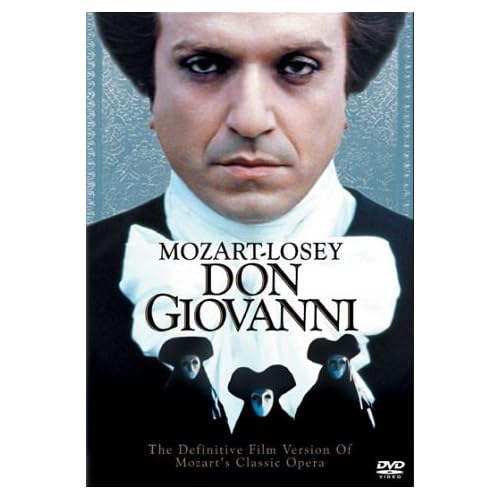
Don Giovanni


The * denotes those I have already had the good fortune to have seen.


Now, the last one: Don Giovanni by Wolfgang Mozart. This past February I had an opportunity to see Porgy and Bess in Dallas but the move to North Carolina prevented me. However, two weeks ago a member of my family casually noted that he was going to see Don Giovanni in Charlotte. I immediately asked if I could go. Thus tonight is the night.

Don Giovanni.

Now I adore Gershwin but Porgy and Bess can never approach Don Giovanni. Mozart’s is the greatest musical ever created by man with his God-given abilities to create. Only Wagner’s Der Ring des Nibelungen comes close but such an idea of their proximity is checked by how distant every other musical piece is positioned. As Charles Gounod proclaimed, Mozart's Don Giovanni is “a work without blemish, of uninterrupted perfection.” Soren Kierkegaard made a similar assessment.

Within its medium, unrivaled perfection. It has that sort of sublimity that prickles the skin but it’s a constant symptom that only dulls hours after the music has stopped. I’m talking about listening to the CD – I am not sure what sort of ecstatic experiences awaits me tonight.

I’ll leave the literary and theological points for your own research ... or you can simply wait for my second novel to come out ... in a number of years.

Wednesday, February 13, 2008

Who Can Join a Baptist Church?

One of the questions I have about church membership revolves around who can join a Baptist Church or any church for that matter.

We as (Southern) Baptists generally allow only those believers who have received believer’s baptism by immersion to join a Baptist Church.

Certainly I believe that “believer’s baptism” is the proper mode of baptism and an important, symbolic step for new believers. That is why I am a Baptist.

However, the Church is the “body of Christ”. It is composed of all believers, everywhere, at any point in time. Entrance into the “body of Christ” as specifically stated by God in Christ is solely based upon God’s grace through faith in Jesus Christ. Nothing else.

The early church wrestled with this issue continuously (see books of Galatians, Romans and Acts). Entrance into the Church is not based upon being Jewish, being circumcised, having a kosher diet, or whether or not one associates with Gentiles.

As the Reformers noted, entrance into the Church is not based upon receiving the “elements” or being baptized as an infant.

God’s grace through faith in Jesus Christ. Nothing else.

Because this is the explicit command of God in Christ, because this has been such an important issue in the early church, in the Reformation church, and in the Baptist church, and, most importantly, because this is Christ’s Church and neither mine nor the Baptists, I suggest that it is completely inappropriate for Baptists to limit entrance into Christ’s church based upon any factor other than belief. To do so would be hubristic and assuming for ourselves the prerogative of God.

The only qualification for Church admission that is given in the New Testament is unrepentant sin. If a member of the Church is sinning, then such expulsion is sanctioned by God in order to bring that person back into relationship with him.

Therefore, if someone is going to expel or hinder believers from Church fellowship because of baptismal mode, they must argue that believer who does not practice believer’s baptism by immersion is sinning.

Again, this one of the questions I have about church membership.

Any opinions about this subject out there?

Any points?

Any insights?

Any flaws in my argument?

Friday, January 25, 2008

***PC Accepts Ministry Position; Moving back to the Carolinas***

After considerable research, visits and, of course, prayer, I have accepted the position of Administrative Pastor at a church in Kings Mountain, NC. I will be moving there in the coming weeks.

Right now we’re are packing and searching both for a house to rent and a job for Lisa.

It's near my home town, they are conservative, very loving and ministering, they want to reach the "poor" and the "fringe", they are apolitical, and the pastor is a humble and
pride-less man!

This is an exciting time for Lisa and I – I am as certain as I have ever been that God is behind this move and ministry (my other two certainties are my salvation in Christ and my marriage to Lisa).

The only theological questions the personnel committee asked was “Who is Jesus Christ?” and “What is the Bible?” – of the latter, they did not mind my quasi-neo-orthodox definition:

“The Scriptures are inspired by God (God-breathed) and are authoritative, infallible, inerrant, and, when I read the Scriptures, I receive the Word of God.”

It is that last part that is the cause of so much contention among evangelicals.

This certainty is very interesting beyond the obvious. I am starting to see how God has prepared me for this ministry going all the way back mainly to 1993 but even to 1985 in some places. And that is a surreal thing … to suddenly understand significant portions of one’s earlier life in terms of what God is doing NOW. I am certainly learning a lot about myself.

Please pray for this transition.
Pray that we find a good house and job for Lisa.
Pray for continued sanctification.
Pray for the ministry and this next chapter: Chapter 7.

I’ve finished my tutelage under “John the Baptist”, come out of the wilderness and its time to go back to Nazareth and preach Isaiah 61. I just turned 30.


PC

Thursday, December 06, 2007

What does the Bible say about dyeing one's hair?

“Gray hair is a crown of splendor; it is attained by a righteous life.” (Proverbs 16:31)

Alright, traditionalists and literalists, how many of you are going to support any policy that bans men and women from dying their hair dark to cover up their gray? Or is this just a cultural issue?

Friday, November 16, 2007

A Question on Church Discipline

Here is a nice ethical question with regards to church discipline:

Let us say that a man in a local church commits a particular sin. Following the Scriptural standards of church discipline as presented by Jesus and Paul, the leaders of the church go to the man and ask him to repent. The man replies that he does not believe that what he did was a sin but agrees to not do it again.

Allow me to restate this.

The man who has sinned believes and continues to believe that what he did was not a sin but, nevertheless, agrees to refrain from committing whatever the sinning act may be.

So my question is this:

What should the leaders of the church do?

Should they allow him to continue to think what he did was not a sin just as long as the act is not committed?

Should they discipline him unless the also agrees that what he did was a sin?

Tuesday, November 13, 2007

REVIVAL IS UPON US

Did you ever notice that the Bible doesn’t deal with issues like “alien baptism”?

Why is it we as Baptists will not associate with Christians who are not Baptize the Biblical way (immersion) but, nevertheless, will not associate with Christians who offer communion in the Biblical way (wine)?

Why do we ban churches that have women as pastors? Why do we not ban churches that have a plurality of elders or just one pastor?

Did you ever notice that God in Christ does not exclude people from church based upon bad theology? Indeed, those with bad theology are encouraged to go to church in order to correct that bad theology, right?

To this day no one has ever been able to show me in the New Testament where someone was excluded from fellowship because of bad theology.

I am sure we all recall those Christians believers in the New Testament who believed that one must be circumcised and observe Jewish “cleanliness” ritual in order to be a part of the people of God. We see these people in Acts and Galatians.

Now the apostles were forced to frequently address this issue in the early church. Unfortunately, even some of the apostles slipped into this type of error (Peter and probably James).

Now notice what the response of the Apostles. What did they do? They taught against this error and continued to do the work of Christ despite the criticism of those wanting to exclude.

Now I believe that many in Baptist life (not to mention evangelicalism and even Christendom itself) are making the same error of the Jewish excluders in the NT (see Acts and Galatians).

In what regards? Note the following: charismas, mode and method of Baptism, alcohol, women in ministry, ecumenicalism, second-degree separation, moderates and liberals, emergent churches, contemporary churches, evolution, secular politics, inerrancy, BWA, CBF, and on and on and on ...

Now some of you may agree or disagree that exclusion based upon one or more of these matters should be deemed as an error. But I’m sure those who disagree with me on this matter would agree that whatever it was that those in Acts and Galatians were doing that it was wrong. So consider the following:

The apostles did not exclude from fellowship those who were advocating exclusion! In fact, the excluders who were leaders in the church were not forced to resign or even told to do so.

Again, to this day no one has ever been able to show me in the New Testament where someone was excluded from fellowship because of bad theology.

Do you know what I think? I think revival is occurring. I think that the Holy Spirit is on the move in a significant and radical way. I think we are in the midst of another Great Awakening. I think that Christians across the world are coming together in new and amazing ways to spread the Gospel and make disciples.

The collapse of modernity and the perceptible mental and spiritual ambiguity of post-modernity, the communication and information revolution, the technological revolution, and the transportation revolution, have afforded the Christian (particularly evangelical) world a magnificent and unprecedented opportunity to carry out the Great Commissions (yes, plural).

Consider the situation, especially you who give considerable attention and investigation to the Sovereignty of God:

Technology, communication, information, transportation ... all these things come from God. God is the author of these things and gives them to man for stewardship. Look how fast they are coming – unprecedented! God is up to something, right? If God was going to break out in revival THIS would be great preparation.

But I do not even believe that this is necessarily preparation; I think it is the REAL thing. Revival! Heck, we’ve been praying about it for years; why couldn’t God be answering that prayer now? And do we think revival will just come to the Southern Baptists, just to the Baptists, just to the evangelicals, Protestants and non-charismatics?

Let me ask you: does revival come from better theology or does better theology come from revival?

Which brings me to this question: why are so many Christians unaware of this Great Awakening?

1) Many Christians are not involved due to personal sin, choice, faith tradition and lack of fellowship

2) Many are occupied with other matters (ala secular politics)

3) Many are preparing for “the rapture” and not working for the “millennium”

4) Many Christians are fighting against the revival when they think they are fighting for it (and in various degrees to be sure)

It’s the latter for which I am somewhat interested – at least for the purposes of this post.

Consider these passages:

For I have been informed concerning you, my brethren, by Chloe's {people,} that there are quarrels among you. Now I mean this, that each one of you is saying, "I am of Paul," and "I of Apollos," and "I of Cephas," and "I of Christ." Has Christ been divided? Paul was not crucified for you, was he? Or were you baptized in the name of Paul? (1 Cor 1:11-13)

For since there is jealousy and strife among you, are you not fleshly, and are you not walking like mere men? For when one says, "I am of Paul," and another, "I am of Apollos," are you not {mere} men. What then is Apollos? And what is Paul? Servants through whom you believed, even as the Lord gave {opportunity} to each one. (1 Cor 3:3-5)

And knowing their thoughts Jesus said to them, "Any kingdom divided against itself is laid waste; and any city or house divided against itself will not stand.” (Matt 12:25; cf. Mark 3:25; Luke 11:17)

"The slaves of the landowner came and said to him, 'Sir, did you not sow good seed in your field? How then does it have tares?' "And he said to them, 'An enemy has done this!' The slaves *said to him, 'Do you want us, then, to go and gather them up?' "But he *said, 'No; for while you are gathering up the tares, you may uproot the wheat with them. 'Allow both to grow together until the harvest; and in the time of the harvest I will say to the reapers, "First gather up the tares and bind them in bundles to burn them up; but gather the wheat into my barn.'"" (Matt 13:27-30)

John said to Him, "Teacher, we saw someone casting out demons in Your name, and we tried to prevent him because he was not following us." But Jesus said, "Do not hinder him, for there is no one who will perform a miracle in My name, and be able soon afterward to speak evil of Me. For he who is not against us is for us. For whoever gives you a cup of water to drink because of your name as {followers} of Christ, truly I say to you, he will not lose his reward." (Mark 9: 38-41)

Peter, turning around, saw the disciple whom Jesus loved following {them;} the one who also had leaned back on His bosom at the supper and said, "Lord, who is the one who betrays You?" So Peter seeing him said to Jesus, "Lord, and what about this man?" Jesus said to him, "If I want him to remain until I come, what {is that} to you? You follow Me!" (John 21:20-22)

“And He was saying to them, "The harvest is plentiful, but the laborers are few; therefore beseech the Lord of the harvest to send out laborers into His harvest.” (Luke 10:2)

And the book of Acts.

Now I know what you’re thinking: this cannot be what the Bible really means. How can the God in Christ allow this?

God is putting up with a fallen world.

God in Christ is putting up with lots of heresy in his Church.

Heck, God in Christ becomes sin so that we might be saved.

There are very important reasons why God is allowing heresy and bad theology to continue in the Church - Matthew 13:27-30 is one of the reasons. Remember: God can turn tares into wheat; he does it all the time. Just be patient and trust God on this one. Just continue to follow the example of Christ and the Apostles when confronted with heresy and bad theology: teach against it.

One more time: to this day no one has ever been able to show me in the New Testament where someone was excluded from fellowship because of bad theology.

Those who truly are not of us (or you) will leave on their own accord (1 John 2:19).

I know this is tough stuff to take and that it takes time to come around to accepting it, let alone agreeing to it. But, hey, the Kingdom of God is not of this world. Read the Sermon on the Mount. Indeed, the cross of Christ is foolishness to everyone, even to most Christians (1 Cor 1:18-31).

Now consider these positions:

Missionaries
Church planters
“Pastors”
“Elders”
“Deacons”
Professors
Widow
“Teacher”
Scholar
Theologian
Worship Leader
Server
Youth Director
Chaplains
Housing Hosts


Now consider these types of people:

Women
Men
Charismatics
Non-charismatics
Non-inerrantists
Non-non-inerrantists
Conservatives
Moderates
Liberals
BWA
CBF
Contemporary Worshippers
Traditional Worshippers
Alcohol Drinkers
Emergent Churches
Contemporary Churches
Fundamentalists
Landmarkists
Bible Church
Mainline Denominations
Free Churches
Republicans
Democrats
Protestants
Roman Catholics
Eastern Orthodox
Calvinists
Non-Calvinists
Open Theists
Jews
Gentiles
God-fearers
New Christians
Old Christians
Youth
Singles
Families
Senior Citizens
Rich
Poor
Middle Class
Black
White Hispanic
Asian
Americans
Non-Americans
The French


Is it not possible that the Satan is using issues like mode of Baptism, communion, alcohol and charismatic gifts, etc. as a means to divide the body of Christ?

Let me ask you: what does the Satan fear more - a unified body of Christ or a divided body of Christ?

Now I’m not asking any of you to accept all of this. It’s extremely difficult to do so and I continually struggle with it myself. I mean, we starting to get into Ecclessiastes ethics here. Qoheleth was a mad dog wasn’t he. Brilliant!

What I am urging is that you do not get in the way of the Holy Spirit on this one.

Remember: to divide the body of Christ is to be “unworthy” at communion.

Revival is upon us. Please be careful.

Sunday, September 16, 2007

“All Israel shall be saved” (Rom 11:26a)

“All Israel shall be saved” (Rom 11:26a)

A highly misunderstood statement by Paul that has fueled pre-millennial dispensationalism.

ALL Israel.

All the Jews? ALL the Jews?

Karl Marx, Sigmund Freud, Albert Einstein, etc? How is it that they get to be saved when they died having never believed? Seems a bit unfair for us Gentiles.

What about those who are half Jewish? Which half is saved?
Because Paul Newman's half-Jewish, Goldie Hawn is too. Put them together, what a fine lookin' Jew!

What about those who convert to Judaism? Could I convert to Judaism, then lead a life of hedonistic abandon and still be saved in the end?

But maybe this verse doesn’t mean ALL in the way that we have generally understood it. Does it mean that all the un-believing Jews who do not die before the second coming of Christ will be saved? I hope so. I want to be in heaven with Woody Allen and the Fonz.

Doesn’t this seem a somewhat odd idea and doctrine if we interpret it as so many pre-millennial dispensationalists do, i.e., that “Israel” refers here to ethnic and racial Jews?

Of course, I do not have their problem. My focus and studies on the corporate nature of Christ leads me to understand in this curious phrase as referring to Jesus Christ as Israel.

Jesus Christ is Israel. And all who are in him shall be saved. All who believe are in him. Those who do not believe are not in him. Those who are not in him shall not be saved. He is Israel. (1)

Gentiles who believe in him are grafted into him (Rom 11:11-24). Jews who disbelieve in him are turned away.

Jesus Christ was a stumbling block for unbelieving first century Jews just as he is a stumbling block for many people today, both Jews and Gentiles. However, though Christ (like the Law) maybe a stumbling block for some, he is a more of a redeemer then the Law could ever be.

Those who come into contact with the Law and its ethical requirements to God and Man must then obey those requirements or suffer the punishment (or curse) for not obeying. But since no one can do everything that is required of the Law everyone is under its curse.

However, Jesus Christ came to save us from the curse of the Law by becoming a curse himself (Gal 3:13).

Instead of attempting the impossible task of accepting and obeying all the requirements of the Law, one can simply accept and obey Christ alone who perfectly accepted and obeyed all the Law.

However, those who come into contact with Jesus Christ and reject him are under the curse of Christ. The first century Jews who rejected Jesus Christ came under the “curse of Christ”, which is why the New Testament writers so often refer to Christ as a stumbling block for the Jews. (2)

Is this what Paul means when he states in Romans 11:26a that “All Israel shall be saved.”

“There shall come out of Zion the Deliverer, and shall turn away ungodliness from Jacob” (Rom 11:26b) (3)


Footnotes:


(1) Did you notice the nice chiasmus I put there?

(2) The idea that the “curse of Christ” means that God punished Jesus is ludicrous, unscriptural and the exact opposite of what Paul is stating. The “curse of Christ” means that God punishes everyone who doesn’t accept Jesus Christ.

(3) Witness to Jews, love the Jews, and treat them with equity, dignity and respect, but do not think that they will play some unique role in the unfolding of eschatological events. The Jews fulfilled their unique role in salvation history in the year A.D. 70. They are no more special that any other racial or ethnic group. But because they are “made in the image of God” they are special just like every other race, ethnicity and person. Let’s pray for a Jewish revival.

"Under God"?

How can a nation be "under God"?

How can a nation not be "under God"?

What nations today are currently "under God"?

What nations today are currently not "under God"?

Sunday, July 22, 2007

Accuracy and the Five (or Six) Fundamentals

In much conservative Christianity there are 5 Fundamentals of the Christian Faith:

1) The Inerrancy of Scripture

2) The Virgin Birth of Christ

3) The Substitutionary Atonement of Christ

4) The Bodily Resurrection of Christ

5) The Physical Second Coming of Christ


I myself hold to all 5 of these “fundamentals”, though if the Substitutionary Atonement of Christ is understood as being limited to only that of the penal substitutionary variety, then I might have drop number 4. I would be 4.5 Fundamentalist. Or would I?

One thing I do not know concerning Fundamentalism is this:

In the truest sense of the movement, is a Fundamentalist one who believes these 5 “Fundamentals” are true or is a Fundamentalist one who believes these 5 “Fundamentals” are fundamental? Or Both?

If both, then must we add another Fundamental?

6) The 5 Fundamentals are fundamental

Of course, then we would have 6 Fundamentals and so it should be stated that “The 6 Fundamentals are fundamental.”

Again, I hold all 5 classic Fundamentals to be true. However, I am absolutely positive that the first 2 Fundamentals are not fundamental. The latter 3 I am not sure are Fundamental.

But let us assume that a Fundamentalist is one who believes these 5 “Fundamentals” are true and that these same 5 “Fundamentals” are fundamental.

It is probably not unreasonable to assume that most Fundamentalists believe that it is essential that these 5 “Fundamentals” are correctly understood by the individual Fundamentalist. One must not only believe that these 5 “Fundamentals” are true; one must also have an accurate understanding of their meaning.

Another thing I do not know concerning Fundamentalism is this:

To what degree of accuracy must the individual Fundamentalist have concerning the meaning of these 5 “Fundamentals”?

1) The Inerrancy of Scripture

There are numerous definitions and understandings of Biblical inerrancy, mine being one of the broader models. Indeed, so many definitions of Biblical inerrancy exist that a few Evangelical Christians got together in Chicago in 1978 to draw up a “definitive” declaration of what Biblical inerrancy is. This Chicago Statement on Biblical inerrancy then became the extrabiblical standard for all evangelical Christians. But what about those evangelical Christians who lived prior to 1978? How accurate must they have been in order to still be considered inerrantist and Fundamentalistic?

How accurate must one’s knowledge be of the Inerrancy of Scripture?

2) The Virgin Birth of Christ

The Isaiah prophecy that Matthew references with concern to the “virgin” birth is derived from the Greek Septuagint Scriptures. However, the original Hebrew version, of which the Septuagint is a translation, doesn’t designate the mother as specifically a “virgin” but as a “young woman”. It’s almost as if Matthew (or someone) based their theological understanding of the Scriptural prophecies of Isaiah on a bad, errant Greek translation of the original, inerrant Hebrew. Now can a person still be said to believe in the “virgin” birth if they do not take the New Testament accounts as “literal” but as a literary device derived their understanding of the episode from the meaning of the original Hebrew prophecy and not the Greek mistranslation?

Again, I myself believe in the classical, traditional and “literal” view of the Virgin Birth that Mary did not have any sexual relations with a man prior to the conception and birth of Jesus.

But how accurate must one’s knowledge be of the Virgin Birth?

3) The Substitutionary Atonement of Christ

There have been numerous views about the Atonement in the history of Christianity. The currently popular view among Roman Catholics and Evangelicals (Penal Substitutionary Atonement) has only been around for six or seven hundred years. What about the prior 1200 years of the Ransom Theory of the Atonement’s dominance? Are all the Christians who lived in the first 1200 years of Christendom apostate and non-Fundamentalists?

I myself hold to the view that Penal Substitutionary Atonement is absolutely and completely wrong. I believe that this view is not only not taught in Scripture but that it is actually condemned. Nevertheless, as stated above, the currently popular view among Evangelicals and Fundamentalists is that of Penal Substitution.

How accurate must one’s knowledge be of the Atonement?

4) The Bodily Resurrection of Christ

[This one was far too complicated to reconstruct and explain for the simple purposes of this post. I think that I make my argument known well enough by the other 4 Fundamentals to justify my choice of not needlessly laboring over a point not necessary to the building of my argument. Though in summation, let me state that the argument made would be more Socratic questions about individual details of the event of Christ’s resurrection. “Mr. Harris, what did you wrought?”]

How accurate must one’s knowledge be of the Bodily Resurrection of Christ?


5) The Physical Second Coming of Christ

We all know that there are myriads of End Time models. The current popular view held by the overwhelming majority of Evangelicals and Fundamentalists is that of Pre-tribulation Rapture, Pre-millennial Classical Dispensationism. This particular model first emerged in the beginning of the 19th Century. What about those Christians who lived for 1800 years prior to the emergence of Pre-tribulation Rapture, Pre-millennial Classical Dispensationism? Were they all apostate and non-Fundamentalists?

How accurate must one’s knowledge be of the Physical Second Coming of Christ?

In essence my primary question to Evangelicals and Fundamentalists is this:

How accurate must a Christian be in his or her understanding of Christian theology and the Christian Faith in order to achieve his or her own salvation?

Friday, July 20, 2007

“The Hokey Pokey”

At church on Wednesday night I participated in the weekly youth group meeting. The youth have been doing a summer series on the Christian Basics: prayer, worship, service, Scripture reading, etc.

This week’s Christian Basic was about worship and how one should worship God. Two of the verses we used were Romans 12:1 and 6:13. One of the great lessons taught was how Christians must worship with their whole body and not just parts. To stress this point to the youth, Andy, the junior high youth pastor, had all the students rise for a rendition of “The Hokey Pokey”.

Occasionally in life we are confronted with moments of sublimity that usually goes unnoticed by most if not all others. One has to be aware of these moments – aware that they can exist – in order to enjoy them. Of course, you may be the only one but do not let that keep you from the experience.

What was this moment of sublimity?

“The Hokey Pokey” is a game-song whose name derives from the word hocus-pocus. Hocus-pocus commonly references a “magical incantation”. The word itself derives from the Latin phrase hoc est corpus. This phrase comes from the Roman Catholic Mass where the priest holds up the sacrament of Christ’s body and says, hoc est corpus, “this is the body”. The idea that the Roman Catholic priest was changing the substance of the bread into the body of Christ resembled magic to many, thus hoc est corpus became hocus-pocus.

So when the youth were doing “The Hokey Pokey” as an object lesson of using your whole body as a living sacrifice to God, they were unknowingly referencing the body of Christ which became a pleasing sacrifice to God (in an obviously non-penal substitutionary atoning manner, I might add). And of course, just as putting your whole self into “The Hokey Pokey”, we can say the same about the corporate nature of Christ: “that’s what it’s all about.”

But the sublimity did not end there. At the start of the evening, we received a telephone call over the loud speakers from the group of youth and trainers who had gone on a mission trip. Where were they? You guessed it: Corpus Christi, TX.

It’s his sort of thing that makes my own life so much more enjoyable.

Friday, July 06, 2007

Proof for the Existence of God

If God does exist, then the very fact that humans know of his existence means that some form of proof has been offered and accepted.

If God does exist, then enough proof has been given to convince 95% of the world’s population at any time in history.

Those who do not believe in God claim the need for proof; those who do believe in the existence of God already have the proof they need.

Thursday, July 05, 2007

Reassessing the Pre-Fallen World: Distinguishing Between What We like and What God Likes

Let us ask tough questions about what the world would look like if Man had not fallen into sin. As believers of God in Christ we should not fear difficult questions; we should relish the opportunity to expand our knowledge of God’s creation. Therefore:

- Would animals kill other animals? I’ve asked this question before with reference to the fact that God created most animals with the ability to hunt and kill and created most animals with the ability to hide from hunters.

- Would mosquitoes and bees exist? Would insects fly around sucking the blood of particular animals? Would bees have stingers? Would flies swarm around wallowing pigs?

- Would people get sunburns?

- Would calluses form on the bottom of people’s feet from continued walking?

- Would people get wrinkles? How about wrinkles under the eyes from laughing?

- Would the earth have strong winds, thunder storms, earthquakes, volcanoes, etc?

- Would meteorites fall from the sky?

- Our bodies were created by God with natural defenses against various foreign anomalies. If what these bodily defenses are resisting are solely outcomes of the fallen world, then God created our bodies in anticipation for this fall. If man had thus not fallen, our bodies would contain purposeless functions. Indeed, we would have body functions that could only find their fullness in a fallen world.

I ask these questions not necessarily to spur controversy or shake people’s theological conception in so much as I wish to incite thought on the part of the Christian.

We as Christians are like every other person created by God in that we will often see something that we personally do not like. In a fallen world this goes without saying. However, as Christian believers, we often see something we do not like and then assume that the Bible must have something condemnatory to say about whatever it is we personally dislike. In many cases the Bible is silent on an issue but we as orthodox believers will nevertheless misread into the text that which we wish to condemn. Certainly it’s easier to publicly condemn something if we have the Bible backing us up.

Unfortunately, we may often condemn that which we may personally dislike even when the Bible gives its approval. Relevant examples include: alcohol consumption, private prayer language, stringed instruments in worship, female pastors, women working outside the home, pacifism, etc.

Coming from a conservative background, there were many theological and Scriptural truths that rubbed against my grain (female pastors, women working outside the home, alcohol consumption). However, in order to be consistent with the Word of God I had to overcome this problem. In truth, the problem I had with women in ministry was my problem and not the problem of the women who minister. I had to pray for strength and understanding so that I could accept what God accepts, indeed what God commands.

I learned that I could not allow my personal, subjective tastes to govern my theology and inform me of what God likes and doesn’t like. To this day, there are many things in the Church which I dislike but which I can find no Scriptural basis to condemn. What do I do? I keep my mouth shut and try to get over it.

Therefore, I submit to you that there are many things in our world which we as humans and Christians dislike and think to be wrong but which God has absolutely no problem. “Animals eating other animals” appears to be one of them. Apparently God has no problem with pythons swallowing pigs. Indeed, God created pythons for that purpose.

Did God intend animals to never die? Where do the Scriptures make this assertion? Where does God state that he will give animals not made “in the image of God” eternal life with an incorruptible body? Nowhere that I can find. In fact, not only does God not seem to mind animals killing other animals, he does not mind humans killing other animals. Did not Christ prepare some fish for his disciples to eat (John 21:9)?

We may not like the idea of “animals eating other animals”, but let us not base our theology on our likes and dislikes.

Also, God apparently has no problem with a world where human beings have some modicum of pain or unpleasantness. My evidence?

To the woman He said, "I will greatly multiply Your pain in childbirth, In pain you will bring forth children; Yet your desire will be for your husband, And he will rule over you." (Genesis 3:16)

Notice that the Lord does not say I will give the woman pain in childbirth. Instead, the Lord states that he will multiply her pains, implying that even in an unfallen world a woman would have had childbirth pains.
We may not like the idea that “women have pain in childbirth”, but let us not base our theology on our likes and dislikes.

And let us not recreate paradise in our own minds based upon our personal likes, dislikes, annoyances, tastes, frustrations and human conception of what makes life good or bad. Such conceptions may not be God’s.

It is in this regard that I urge evangelical Christians to reassess some of the traditional conceptions of what the pre-Fallen world was like.

Such a reassessment must be based upon the witness of Scriptures, but our interpretation of the Scriptures must be tempered by historic traditions, human reason and human experience. Reason and experience (along with tradition) will help us interpret what the Scriptures teach but they will also help us in areas where the Scriptures are silent.

Factors of major consideration should include:

- The non-literal nature of both creation stories in Genesis 1-3.

- Jesus Christ as full revelation of both Man and God.

- God’s own direct statements about creation; the figurative poems of the prophetic books; the wisdom literature

- Various scientific evidence, formulations, theories and models

- Similarities and differences between Greek and Hebrew conceptions of creation

- Hard questions like the ones I asked above

I believe that if evangelical theology is going to have any relevancy or contribution for Christian cosmology, we need to base our theological conceptions upon an accurate reading of what Scripture says and what it does not say. Otherwise, we will continue to tinker with our own favorite, self-made toys.