Wednesday, November 07, 2018

Identifying the Causes in the Age of Outrage


I’m interested in how people think and why they believe what they believe. Therefore, I was very interested in reading Ed Stetzer’s book, Christians in the Age of Outrage. I’m about to start chapter six, but the book is pretty good so far. Chapter 3 has been my favorite. However, chapters 1-2 lays out what Stetzer believes are the causes of the societal outrage. I’ve pondered this specific question for several years now, and I think I already had a few possible causes. I wanted to see how mine compared with Stetzer’s so, before I read his tow chapters on the subject, I outlined my thoughts. I then compared them to what Stetzer identifies. Here are the results.

What I identify as the causes of the outrage:

I.                     Loss of monolithic news media
a.       More informed citizenry
b.       Less informed citizenry
c.       News media competition
d.       Abandonment of the adherence to objectivity

II.                   Technological advancement in telecommunications
a.       Rise in social media
                                                               i.      Anonymity eliminating peer pressure
                                                             ii.      Mass bullying
b.       Instantaneous news and opinion on a massive scale
                                                               i.      Fear
                                                             ii.      Distraction
                                                           iii.      False leadership -> false outrage, false importance, false concern

III.                 The politicization of every aspect of the culture and society

IV.                The spread of socialism through the media intelligentsia

V.                  The decline of socialism
a.       Realization of the failure
b.       Success of free market capitalism
c.       Mass electoral shift

VI.                Realization that much governance is accomplished by judicial fiat and anonymous regulation

VII.               Delusional victimization and self-justification as a response to results of personal choices in the wake of the mass cultural and societal changes

What Stetzer identifies as the causes of the outrage:

I.                     Cultural Forking
a.       Loss of Cultural Christianity
b.       Tribalism and Polarization (1994- )
c.       Lack of Compromise
d.       Anti-expertise
e.       Silencing disagreement

II.                   Technology
a.       Clickbait
b.       Fake News
c.       Outrage Cycle
                                                               i.      Mobs
                                                             ii.      Counter outrage
                                                           iii.      Anger at being conned


There are definitely similarities and crossovers in our identifications. 


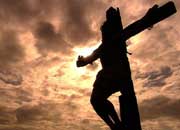
Psalm 22: A Key to Interpreting the Crucifixion of Jesus


I’ve noted before that Jesus' cry from the cross, “ELOI, ELOI, LAMA SABACHTHANI?” which is translated, “MY GOD, MY GOD, WHY HAVE YOU FORSAKEN ME?” (Matthew 27:46; Mark 15:34), is a quote from the first line of Psalm 22. I’ve also noted that if you read the entire psalm, particularly verse 24, you readily see that the individual lamenting to God has in no way been actually forsaken – it just appears that way to all outside observers.

Now there are other connections between the Psalm and the crucifixion of Jesus:

“They pierced my hands and my feet” (v. 16 [Matthew 27:35; Mark 15:24; Luke 23:33]).
“They divide my garments among them” (v. 18 [Matthew 27:35; Mark 15:24]).

As I was studying Psalm 22 yesterday morning, I was struck by the final five verses:

‘All the ends of the earth will remember and turn to the LORD,
And all the families of the nations will worship before You.
For the kingdom is the LORD’S
And He rules over the nations.
All the prosperous of the earth will eat and worship,
All those who go down to the dust will bow before Him,
Even he who cannot keep his soul alive.
Posterity will serve Him;
It will be told of the Lord to the coming generation.
They will come and will declare His righteousness
To a people who will be born, that He has performed it” (vv. 27-31).

After the Psalmist’s lament about his persecution and God’s salvation, the psalm begins to speak about how God is King, how God’s Kingdom, his rule over all the nations of the world, how all people groups of the world will turn to him, and how even those dead in the ground will worship the Lord.
This reminded me of one of the central points of crucifixion narrative: the coronation and enthronement of Jesus over the world.

“Then the soldiers of the governor took Jesus into the Praetorium and gathered the whole Roman cohort around Him. They stripped Him and put a scarlet robe on Him. And after twisting together a crown of thorns, they put it on His head, and a reed in His right hand; and they knelt down before Him and mocked Him, saying, ‘Hail, King of the Jews!’ They spat on Him, and took the reed and began to beat Him on the head. After they had mocked Him, they took the scarlet robe off Him and put His own garments back on Him, and led Him away to crucify Him” (Matthew 27:27-31; cf. Mark 15:16-20; John 19:1-5).

Intended by the Romans to be a macabre, mocking parody of the charge against Jesus, the soldiers dress him up as a king with robe, staff, and crown. They then put him on the cross and hang a sign above his head, “This is the king of the Jews” (Matthew 27:37; Mark 15:26; Luke 23:38; John 19:19). In the most startling, scandalous, ironic event in human history, Jesus becomes King of the Jews and King of the World by being humiliated and executed on a Roman cross. This is his coronation and enthronement. This is how his kingdom arrives.

Therefore, I submit that the use of Psalm 22 by Jesus, Mark, and Matthew is not simply a way of explaining that, like the Psalmist, Jesus, despite the outward appearances, has not been forsaken by God. In truth, and most importantly, the use of Psalm 22 is identifying Jesus as God and pointing out how the crucifixion scenario established the Kingdom of God, how it will bring all people groups together under allegiance to Jesus, and how it will resurrect believers from the dead. When Jesus explained to the disciples why it was necessary that Christ should suffer (Luke 24:26-27), I strongly suspect that Psalm 22 and Isaiah 53 were two of the chief passages he referenced.

This gets into some deep theology, but is evident from the Biblical texts that humility, submission, and suffering are a means of defeating evil, sin, idolatry, and the dark powers. This is a theme that is picked up by Paul, principally in Philippians, Peter in his first letter, and Barnabas in Hebrews. I’m still wrestling for why this is the case (it’s one of the top three theological issues I’ve been thinking about), but it nevertheless seems to be true. I explore this idea in a couple of places in the book I’m writing, specifically in my examination of how to engage fallen powers and generally in my critique of Prosperity Theology.

Regardless, I believe Jesus’ so-called “cry of dereliction,” in quoting from Psalm 22, is actually key to interpreting what is going on with the crucifixion. Jesus is identified both with the lamenter and with God. Despite all outward appearances, God has not rejected or forsaken Jesus. Jesus’ suffering is bringing about the Kingdom of God and Jesus himself as the King. Not only is Jesus the King over Israel but he is the ruler of the world. All the people groups of the world will now begin to pour in with allegiance to him. It will mean resurrection for worshipping humanity.

Friday, November 02, 2018

Somewhere in a prison in Ephesus ...


[Somewhere in a prison in Ephesus]


Paul: “Epaphroditus, I’m responding to the wonderful gift you brought from the church in Philippi. Could you please check this for any typos?”


Epaphroditus: “Did you mean τύπος?”


Paul: “What?”


Epaphroditus: “Never mind. Certainly, I’ll look it over.”


[begins reading]


Epaphroditus: “So far so good.”


[continues reading]


Epaphroditus: “Wait. ‘πολλῷ γὰρ μᾶλλον κρεῖσσον.’ That’s laying it on a bit thick, isn’t it?”


Paul: “You think I should tone it down a bit?”


Epaphroditus: (deliberating) “Uh … Nah. Go ahead and leave it like that.”


[continues reading]


Epaphroditus: “A lot about of suffering in here. You should mention my illness.”


Paul: “I do. Keep reading.”


Epaphroditus: “Ah”


[continues reading]


Epaphroditus: “And joy. Good.”


[continues reading]


Epaphroditus: “Hmmm. Wow. Yes, that poem you added beginning with ‘τοῦτο φρονεῖτε ἐν ὑμῖν ὃ καὶ ἐν Χριστῷ Ἰησοῦ’ – that’s quite brilliant right there.”


Paul: “I’m quite pleased with that part myself.”


[continues reading]


Epaphroditus: ‘πᾶν γόνυ κάμψῃ … πᾶσα γλῶσσα ἐξομολογήσηται.’ Ah, you’re quoting that verse from Isaiah about God. And you’re applying it directly to Jesus. Just like you inserted Jesus into the Shema in your second letter to the church in Corinth. Yeah, that’s good stuff.”


[continues reading]


Epaphroditus: “‘μετὰ φόβου καὶ τρόμου τὴν ἑαυτῶν σωτηρίαν κατεργάζεσθε  θεὸς γάρ ἐστιν ὁ ἐνεργῶν ἐν ὑμῖν καὶ τὸ θέλειν καὶ τὸ ἐνεργεῖν ὑπὲρ τῆς εὐδοκίας.’ Oh, that’s gold there, Paul. That does sound a bit like James the Just though.”


[continues reading]


Epaphroditus: “Oh, here’s the bit about me.”


[continues reading]


Epaphroditus: “Why thank you, Paul!”


Paul: “Don’t mention it.”


Epaphroditus: “Though you could mention here that I almost died.”


Paul: “I mention it below. Keep reading.”


[continues reading]


Epaphroditus: “Ah, yes. Still, mention it again. Tell them my life was in danger.”


Paul: “If you so wish.”


[continues reading]


Epaphroditus: “Woa! ‘βλέπετε τοὺς κύνας βλέπετε τοὺς κακοὺς ἐργάτας βλέπετε τὴν κατατομήν.’ That’s a bit rough, don’t you think?”


Paul: “I’m not changing it.”


[continues reading]


Epaphroditus: “I didn’t know you were from the tribe of Benjamin. Is it true you’re all left-handed?”


Paul: “Actually, I was born left-handed but my rabbi forced me to write with my other hand. That’s why my handwriting is so poor.”


Epaphroditus: “Yes …”


Paul: “And it doesn’t help that my eyesight is bad.”


Epaphroditus: “Such large lettering. You really should just dictate this to Tertius. Just sign your name at the end.”


[continues reading]


Epaphroditus: “Woa! Woa, woa!! Paul! You can’t say σκύβαλα.”


Paul: “Well, why not?”


Epaphroditus: “Because … because this is supposed to be read out loud in church. I’m the one who’s going to have to read this to them. You’re going to shock the old ladies …”


Paul: “The shock value is the point.”


Epaphroditus: “… the youth on the back row will be snickering …”


Paul: “I was inspired to write that.”


Epaphroditus: “I really urge you to consider changing it.”


Paul: “I’m not changing it.”


Epaphroditus: “Paul …”


Paul: “I’m going to assert my apostleship here.”


Epaphroditus: “I’m an apostle, too!”


Paul: “I’ve seen the risen Christ.”


Epaphroditus: “Fine!”


[continues reading]


Epaphroditus: “Hmm. A lot more in here about suffering and humbleness. That’s all good.”


[continues reading]


Epaphroditus: “And the resurrection. Good.”


Epaphroditus: “Hmm. You’re handwriting really is bad, isn’t it? Is that ‘τό αυτό φρονείν’ or ‘τῷ αὐτῷ στοιχεῖν’ or …?”


Paul: “τῷ αὐτῷ στοιχεῖν.”


Epaphroditus: “Ah, yes.”


[continues reading]


Epaphroditus: “Oh, wait. You’re connecting one’s present suffering and humbleness with that of Christ’s and then his resurrection and then, therefore, our eventual resurrection and the glory of a race well run … We’re supposed to imitate you because you’re imitating Christ … I gotcha. I see what you’re doing here.”


[continues reading]


Epaphroditus: “‘ὥστε ἀδελφοί μου ἀγαπητοὶ καὶ ἐπιπόθητοι χαρὰ καὶ στέφανός μου.’ That’s quite lovely, Paul. Quite sweet.”


Paul: “It comes from the heart.”


Epaphroditus: “Well, this all looks pretty good – apart from the obvious σκύβαλα – so make whatever corrections you wish. [Calling to the guards] Alright, let me out! [To Paul] I’ll be back tomorrow.”


Paul: “The grace of the Lord Jesus, the Messiah, be with your spirit.”


Sunday, October 21, 2018

In Praise of The Beta Band


I have two or so primary interests: theology and art. Both are grounded in my reading of Genesis 1-3 and other biblical passages on anthropology. My interest in art is widespread and includes the visual arts, drama, literature, film, cuisine, and music. I’m extremely picky about my art and usually do extensive research before I watch a film, a TV series, visit a restaurant, and listen to a music album. Even then, much of the highly critically reviewed stuff is mediocre at best and mostly rubbish. For example, every few years I will read lists of the top critically reviewed music albums of the decade. Even with these lists, 90% of the albums are rubbish. To find a truly great album and a truly great musical act takes a mass amount of listenings. But once you do, once you find that gem amongst those rocks that the critics actually think are good, then it’s absolute joy. This is how I found Danielson, Sufjan Stevens, Belle & Sebastian, Vampire Weekend, Fleet Foxes, and Joanna Newsome. This is how I found The Beta Band.


I’m a really big fan of folk music and its many derivatives. I like Bob Dylan, Nick Drake, T. Rex, and Beck. I’m a HUGE Beck fan. I have all 64 of his 13 albums. Granted, Beck is known for his fusion of various genres, including rock, hip hop, techno, country, funk, and soul. In particular, his album Mutations (1998) is probably the best folktronica album ever. Folktronica is a musical genre that combines elements of folk music and electronica, featuring uses of acoustic instruments and often incorporating hip hop influences. It is from my appreciation of Mutations that I immediately recognized the brilliance of The Beta Band when I was introduced to their album, Heroes to Zeros (2004). My appreciation of them has only continued to grow since that introduction in 2010.


The Beta Band were a Scottish folktronica band formed in 1996 that blended folk, electronic, rock, trip hop, and experimental jamming. They were critically acclaimed, achieved something of a cult status, and were highly praised by other contemporary British bands such as Radiohead and Oasis. Their reputation as the neo-folk second coming of Pink Floyd stem from their first three EPs: Champion Versions (1997), The Patty Patty Sound (1998), and Los Amigos del Beta Bandidos (1998). All three were eventually collected in the compilation album, The Three E.P.’s (1999). Those E.P.s were highly experimental, combining both folktronica and elements of hip hop. The songs were complex, layered, fusioned, but catchy and with subdued vocals, haunting and harmonic like that of Nick Drake. This was the Beta Band sound. Choice tracks: “Dry the Rain,” "Dogs Got a Bone," "Inner Meet Me," "She's the One,” “It’s Over,” and “Needles in the Eye.”


Based on the prestige of their prior EPs, the first LP, The Beta Band (1999), was one the most highly anticipated releases since Oasis’ Definitely Maybe (1994). The album built upon the experimental nature of their EPs and was seen as particularly intricate, experimental and layered, with a variety of different influences, sound effects, instrumentation and song structures. If anything, the album was far more experimental and certainly more ambitious with the band having to be convinced to forgo some of the more ambitious elements. However, both financial and time constraints led to what the band themselves considered a muddied recording concession. The band’s perfectionism infamously exposed itself when they denounced their debut album a week before its launch. Nevertheless, the album was well-received by critics and has subsequently been reconsidered by even hesitant critics as an underrated masterpiece. The Beta Band (1999) is an odd album no doubt. It’s complete postmodern pastiche without the irony. It’s opening song, “The Beta Band Rap”, is a mix of doo-wop, hip hop, and early 1960s rock n roll. The second song, "It's Not Too Beautiful", starts off as a typical Beta Band-sounding song but then includes a sample from the score of the film, The Black Hole (1979). By the time the listener gets to the fourth track, "Round the Bend", you realize that one is working with an unnecessarily difficult album by some super talented songwriters out to prove they can do genius and exceeding too well. The stylistic and structural similarities with Beck’s Mellow Gold (1994) are unmistakable. Choice tracks: “It’s Not too Beautiful,” “Round the Bend,” and "Brokenupadingdong.”


Their second album, Hot Shots II (2001), proved to be just as experimental but far more accessible in a way similar to their original EPs. Folk, hip hop, and electronica are on full display. The opening song, “Squares,” is symphonic trip hop reminiscent of Portishead. Other songs, such as “Dragon” and “Broke”, continue these complex, electronic hip hop sounds. Still, as with most other folktronica, the techno is layered upon the folk. Choice tracks: “Squares,” “Human Being,” and “Dragon.”


Their supreme achievement undoubtedly came with their final album, Heroes to Zeros (2004). Produced by Tom Rothrock and mixed by Nigel Godrich (one the regular producer for Radiohead and both producers for Beck), it is far less experimental but far more sublime and accessible than the previous two albums. Here there is a decrease in the hip hop and general ambient electronica. Rather, the electronica, like with Beck’s Mutations, is more employed to enhance the specific song structures rather than lead the soundscapes. Also employed are more brass, strings, and straight rock. Nevertheless, there are still hints to the experimentation of the earlier albums just with a lot more focus and direction. Choice tracks: “Assessment,” “Space,” “Lion Thief,” “Easy,” “Wonderful,” and “Simple.”


The band announced their breakup on their website on 2 August 2004. In November, they performed at the Summer Sundae festival and commenced a farewell tour. Their final show was at Edinburgh's Liquid Rooms venue on 5 December 2004. They subsequently released The Best of The Beta Band (2005), a two-disc set which includes the best of the studio recordings and a live performance at Shepherds Bush Empire (30 November 2004).


I write on The Beta Band because they are past and remain relatively obscure, yet astonishingly brilliant. They were writers and performers of highly complex and layered records and ambitious perfectionists of trip hop folktronica. Like the brief output of Nick Drake and Kurt Cobain, The Beta Band only produced a handful of records. We only have three EPs, three records, and a live record. The rest are compilations.


A great introduction are their most accessible songs:


"Dry the Rain"

"Inner Meet Me"

"She's the One"

"Wonderful"

“Human Being”


Wednesday, October 17, 2018

Somewhere at a Bible Translation Society …


TEXTUAL CRITIC #1: “So how is your part of the translation going? What are you working on today?”


TC #2: “Well you may ask. You remember that poetic passage in the Old Testament that talks about creation itself bringing glory to God and how the very trees applaud the Lord?”


TC #1: “Of course.”


TC #2: “Well, I was reading the Masoretic text (circa 700s CE) and the Hebrew reads, ‘the trees clap hams for the Lord.’”


TC #1: (Pause) “’The trees clap hams?’”


TC #2: “’The trees clap hams.’”


TC #1: “Let me see that.” (Reads) “’The trees clap hams.’ Yep.”


TC #2: “Yep.”


TC #1: “Seems rather odd, doesn’t it?”


TC #2: “Well, it’s a poetic metaphor; it’s not to be taken literally.”


TC #1: “Granted, but the metaphor must maintain consistent internal sense in order to properly convey the appropriate theological concept. The smacking together of pork products is not generally considered a traditional form of showing praise – particularly Jewish praise.”


TC #2: “Ah. I see your point. Still, who are we to argue with unanimous attestation?”


TC #1: “Oh? Why, is the verse quoted or paraphrased anywhere in the New Testament?”


TC #2: “Negative.”


TC #1: “What about Philo, Josephus, the Talmud, the Targums, the Rabbinic traditions?”


TC #2: “Ah ha! They all say ‘clap hams.’ Though the strained explanations of its meaning amongst the rabbis vary wildly. Indeed, Maimonides, employing apophatic theology, thought ‘ham’ was just a negative attribution for ‘poultry.’”


TC #1: “What about the early church fathers? The Vulgate?”


TC #2: “Again, all unanimous in the attestation of ‘hams.’ And, just like the rabbinic literature, the allegorical interpretations of the Alexandrian school for ‘ham’ are legion. Naturally, Origen takes it to the extreme and quotes Jesus as saying, ‘If thy ham offends thee, cut it off.’”


TC #1: “Hmm. Even so, I still go back to the idea that the slapping of meat is not a customary form of demonstrating appreciation – at least amongst the Israelites.”


TC #2: “Perhaps it’s a haporx legomenon.”


TC #1: “Perhaps. Or perhaps … You know, the Hebrew ‘m’ and the Hebrew ‘n’ are quite similar letters. And the Hebrew word for ‘ham’ is quite close to the Hebrew word for ‘hand’. And seeing how it’s usually been more common to show approval by clapping hands rather than slamming together bits of swine …”


TC #2: “I think I see where you’re going with this.”


TC #1: “… it’s quite possible some ancient scribe erred in his transmission of a copy of the original text and wrote ‘hams’ where he should have written ‘hands.’”


TC #2: “Yes, I do see your argument.” (Pause) “Still, with such unanimous multiple attestations to ‘ham’ in near contemporaneous sources …”


TC # 3: (Approaching) “I just got back from looking at the Septuagint (circa 200 BCE). It reads ‘clap hams.’”


TC #1: “What?”


TC #2: “There you have it.”


TC #1: “Really? In the Greek?”


TC #4: (Approaching) “Not so fast! I just got back from the neighboring Jewish seminary …”


TC #2: “Good.”


TC #4: “… and I read their copy of the Samaritan Pentateuch (circa 200 BCE) …”


TC #1: “Good, yes.”


TC #4: “… and it reads ‘clap hands.’”


TC #2: “Huh.”


TC #1: “Huh.”


ALL: “Hmm.”


TC #2: “Bit of a textual stalemate, isn’t it?”


TC #5: (running up breathlessly) “Right. I just got through reading the Dead Sea Scrolls (circa 400 BCE) …”


TC #1: “Good.”


TC #2: “What, all of them?”


TC #5: “… and according to 4Q Pentateuch, 3Q Pentatuech Pesher, 6Q Pseudo-Enoch, and 4Q Aramaic War Pigs Scroll, they are unanimous: ‘The trees clap hands.’”


TC #1: “And there you have it.”


TC #2: “It’s conclusive.”


TC #1: “Hands.”


TC #3: “No doubt.”


TC #2: “No question. Hands down.”


TC #1: “Okay, now that we have definitely established that the Holy Spirit inspired the ancient prophet to write ‘claps hands’, let me remind you that we are producing this translation for a non-charismatic denomination that believes clapping hands to music in a worship service is worldly behavior. Therefore, I recommend we translate this verse as ‘The trees clap hens’ but add a footnote that reads ‘Many manuscripts read “hands.”’ A negative attribution. All in favor?”


ALL: (Hands up) “Aye!”


TC #1: “Consensus reached. Unanimous attestation.”