Wednesday, May 16, 2018

Discerning the Discernment Bloggers


Over the past few months I’ve begun to refamiliarize myself with the heresy-hunters of evangelical Christendom. It’s been many years actually. Apparently, they are now called “discernment bloggers” and are doing their thing via blogs, podcasts, and tweets. My problem with these individuals is that they too often go after good Biblical preachers, speakers, and pastors. Their false targets tend to be highly effective and popular ministers who are making a huge impact for the Kingdom of God. These targets are labeled “false teachers” and “heretics” while pursuing their God-ordained ministries.

I’d like to delve into the matter of “discernment bloggers”. I’m not going to name any names because 1) that’s not my purpose, 2) I’m speaking generally here, 3) occasionally they do point out a real false teacher, and 4) I know some of them personally. With this in mind, I’m also not going to offer any specific examples so as not to link back to specific individuals. Rather, I want to give you some of my observations into their methodology so you can discern whether or not those being critical are being false or not. Here is what I notice about “discernment bloggers”:

  • They tend to be profoundly ignorant of the Scriptures and have an immature understanding of the faith. They are often fundamentalist in theology and disposition.
  • They approach their subject in hateful, arrogant, and worldly manners. They show little signs of humility, which is actually fundamental in accurately discerning Biblical truth and falsehood. They never approach their subject matter with gentle, loving correction. Indeed, they don’t show the necessary spiritual fruit to be taken seriously.
  • They are often short on evidence and long on opinion and characterization. Instead of providing evidence of false teachings or explanations of why such teachings are false, they prefer ad hominem attacks. Usually, one has to read several paragraphs of vitriol before coming to the current point of attack.
  •  They often mischaracterize a preacher’s sermon, taking bits out of context.
  • Their rants are not analyses of preachers’ arguments but characterizations of particular pull-quotes. This, in of itself, is strange. You would think that if they were so concerned with a false teaching, they would actually involve themselves in the actual argument, the actual point, that these false teachers are attempting to make. But they aren’t. Instead, they focus on individual quotes. They seem either incapable or unwilling to understand someone’s overall argument and then understand the quote in light of that argument. But this shouldn’t be surprising; they frequently take Scripture out of context.
  • Their evidence often consists of links to other discernment bloggers who themselves mischaracterize a preacher’s sermon, taking bits out of context.
  •  When I’ve finally tracked down the sermon in question, I find that a preacher’s words have been obviously mischaracterized. Indeed, so obvious are the mischaracterizations that I often suspect that the blogger is being deliberately false. Indeed, it’s almost as if they hope you won’t look at the evidence or listen to the whole sermon, but just take their word for it.
  • Guilt by association seems to be the most prominent means of attack. A preacher’s sermons, quotes, ministry, and/or person is dismissed as false because he or she can be somehow linked to another presumed false teacher. “He is friends with X.” “She’s friendly with Y.” “He spoke at the same conference as her.” “She went on his show.” What is not discussed is any similarities in their teachings and theological positions. Furthermore, at most, a mischaracterized pull-quote is taken out of its context to link a preacher to a “disreputable” movement. Again, what is missing is an analysis of the actual teaching.


These observations come down to three points about “discernment blogger” methodology: ad hominem attacks, Scriptural ignorance, and lack of analysis. It’s the last point that seems the most important to me. Whether from laziness or intention, the lack of analysis of a presumed false teacher’s argument should absolutely disqualify a “discernment blogger” from serious consideration. It seems most people like ad hominem attacks and most people are ignorant of Scripture. At the very least, you should recognize when someone is not analyzing a quote within the intended point of the sermon.

Even if these “discernment bloggers” are not deliberately mischaracterizing a preacher’s sermons, their sloppy criticism and lack of analysis on such a serious issue absolutely disqualifies them from discernment. Indeed, they themselves are false teachers. They themselves are leading people astray. This is the great irony of the “discernment bloggers”. Their ignorance and mischaracterizations are damaging the Kingdom of God and ministries of individuals within them. Furthermore, they are making it more difficult for people to spot real false teachers. As I’ve often said, “Wolves in sheep’s clothing often don’t know they are wolves in sheep’s clothing.”

                So just be careful when someone labels another person a false teacher. Before you accept such a characterization, please do your research. Listen to the entire sermon, look at the overall work of a preacher. Be sure you are discerning the discerner. That includes me.

Monday, May 14, 2018

The Real Problem with Andy Stanley’s Sermon: A Response to the Argument in Aftermath, Part 3: Not Difficult


Personally, I really like Andy Stanley. I’ve read a few of his books and used a few of his series at different churches. I think he’s done amazing work for the Kingdom of God in Georgia and elsewhere.

When I first saw the headlines about his “OT-unhitching sermon” I first assumed he was either being misunderstood, mischaracterized, or taken out of context. So I ignored it. But then I saw people whose insights I appreciate make criticisms. So I read some sermon quotes from some critical articles.

"[First century] Church leaders unhitched the church from the worldview, value system, and regulations of the Jewish scriptures."

"Peter, James, Paul elected to unhitch the Christian faith from their Jewish scriptures, and my friends, we must as well."

"Jesus' new covenant, his covenant with the nations, his covenant with you, his covenant with us, can stand on its own two nail-scarred resurrection feet. It does not need propping up by the Jewish scriptures."

To me the quotes were extremely distressing as well as highly inaccurate about apostolic teachings, and I couldn’t see how they could be taken out of context. I thought, “You better rethink that, brother.” Nevertheless, I’ve heard preachers in the past speak about legalistic Judaism and how Jesus came to abolish the Law. Certainly, the ceremonial and sacrificial requirements, as well as the cultural identity markers, are no longer required for followers of Jesus; perhaps Stanley was simply uncharacteristically muddled in his presentation. Perhaps he went off script in his enthusiasm. It’s possible.

A few days passed, and I saw the following comment by a theologian:

“The reactions to Andy Stanley by Rachel Held Evans and many others seems to me largely based on a clickbait headline. If he had said ‘the OT is not directly normative for Christians’ he would have said the same thing. It's a pointless controversy.”

To me the sermon quotes did not indicate a pointless controversy, and they did seem to go further than simple questions about normative practice. However, to clear up the confusion in my own mind, I decided to listen to the entire sermon.

Having now twice listened to the sermon, Aftermath, Part 3: Not Difficult, I must admit that it is far worse than even the pulled quotes indicate. People are rightly upset about Stanley’s disregard of the Old Testament, but, actually, his disregard is a means to a specific end. It’s that end, and the argument he constructs, that is the real, serious problem.

Much of his sermon is a theological train wreck. He obviously has a terrible grasp of the covenant, Israel, the Law, Judaism, and how the Apostles and New Testament writers understood the Old Testament scriptures. However, he is only somewhat more confused than the average pastor is with this stuff. But, far beyond the misconceptions of some popular theology, Stanley confuses the “Law of Moses” with the Old Testament. He appears to confuse the ceremonial and ethnic cultural badges of the Old Testament with the moral rules, especially the sexual morals.

In his teaching on the Jerusalem Council of Acts 15, Stanley argues that the conclusion to the question of whether Gentiles should adopt circumcision (and other “works of the law”) was summed up in James’ statement, “It is my judgment, therefore, that we should not make it difficult for the Gentiles who are turning to God” (Acts 15:19 NIV).

Stanley argues that the Jerusalem Council concluded that Gentiles should not follow the Law of Moses or the Old Testament as a whole. He says the Jerusalem Council was effectively saying to the Gentiles, “You are not accountable to the Ten Commandments.” Stanley then tells his congregants what James is effectively telling them: “You should not obey the Ten Commandments because those aren’t your commandments. Yours are better. And yours are far less complicated.”

Here’s the key thing: no one in the American Church or contemporary evangelicalism is currently advocating that today’s Christians follow circumcision, Jewish dietary laws, ceremonial cleanliness, or any of the other Jewish ethnic traditions involved in the Acts 15 debate. So what are the Jewish, Old Testament rules that Stanley intends his congregants to abandon? Stanley doesn’t really say. He doesn’t specify. He doesn’t give a direct, practical application to his sermon. He leaves it up to the congregation to decide how to specifically apply his teaching. However, he does give a general idea of what he’s thinking about.

Stanley states that the letter from the Council telling Gentiles to avoid foods sacrificed to idols and the eating of blooded animals (15:20, 29) was simply a compromise to keep the peace with the Jews. He then states that the reference in the same verses to abstain from sexual immorality is not tied to Old Testament sexual ethics, while also saying that probably everyone would have a different view of what sexual immorality means. Notice these sermons quotes:

“This is so important: This was a general call to avoid immoral behavior but not immoral behavior as defined by the Old Testament.”

“Paul tied sexual behavior, not to the Old Covenant, not the Ten Commandments, but the one commandment Jesus gave us: You are to treat others as God through Christ has treated you.”

“Paul was explicit about teaching on sexual immorality, but he did not tie it to the Old Testament.
“The old covenant, law of Moses, was not the go-to source regarding sexual behavior for the church.”

“The old covenant, law of Moses, was not the go-to source regarding any behavior for the church.”

Basically, Stanley appears to be saying that New Testament teachings on sexual immorality are not tied to Old Testament conceptions and that sexual immorality should be defined as treating others like Christ has treated you.

Now obviously Stanley’s argument is Scripturally erroneous. The New Testament writers, Jesus, and Paul himself frequently defined Christian morality (sexual and otherwise) by the Old Testament and pointed to the Old Testament Scriptures frequently as a basis. One of the major parts of the New Covenant and the outpouring of the Holy Spirit was not a rejection of the Law but the Spirit-driven ability to actually do the Law. But I leave it to others to pick apart Stanley’s theology here. My focus is not the merits of the argument but the construction of the argument and the end to which it points. He’s obviously not going of script. You can tell he’s not fumbling about, misstating what he actually means. He is making a deliberately intentioned, scripted argument. And that’s my concern. Here’s how I would sum up his argument:

“‘People are losing faith because of something in or about the Bible, especially the Old Testament.’ We should not make it difficult for people to embrace the Christian Faith. The Apostles and early Christians abandoned the Old Testament rules, including the rules of sexual immorality, to include others; we should do so as well. Instead, our sexual ethics should be based solely on one rule: ‘You are to treat others as God through Christ has treated you.’”

If this correctly summarizes Stanley’s point (and I believe it does), what do you think he is referring to?

Note the following summary Stanley gives concerning Peter’s testimony:

“God is doing something new in the world and we [referring to Peter speaking to first century Jewish Christians] need to be a part of it even if it means letting go of and setting aside the traditions, the *Scripture* [Stanley says with emphasis] we grew up with.”

I think Andy Stanley has left his application unstated but heavily implied.

Again, I really like Stanley. I really tried to give him the benefit of the doubt and consider other interpretations of his sermon. If I have mischaracterized his argument and point, I do apologize; but I really don’t think I have. Regardless, I recommend people listen to the sermon and gauge for themselves if I have been unfair in my critique. If I am right, I hope some learned pastor friends of Stanley’s will pull him aside and offer some loving correction.

Monday, May 07, 2018

Getting the Gospel Right: Correcting the Popular Misconception about the Message of the Gospel


The biggest, most fundamental misconception of the Christian Faith is the Gospel itself. I find it utterly bewildering that the most essential concept of the Christian religion is so completely misunderstood by the vast majority of Christians, including well-known preachers and theologians. I find this somewhat baffling because even a casual reading of the New Testament gives a clear indication of the meaning. Let’s examine the evidence.

The word Gospel is derived from the Greek work euggelion and literally means “good news”. So what is this good news to which the Gospel refers? The popular and pervasive belief is that the Gospel refers to the idea that “Jesus died for your sins, so you can be saved if you believe”. The problem with this conception of the Gospel is that it’s wrong. The gospel itself is not principally about “personal salvation” but specifically about the coming of the Kingdom of God. You can see this in Matthew 4:23: “Jesus went throughout Galilee, teaching in their synagogues, proclaiming the good news of the kingdom.” (Other places are Matthew 9:35; 24:14; Mark 1:14-15; Luke 4:43; 8:1; 16:16; Acts 8:12; 20:25; 28:31.) The Kingdom of God (or Heaven) is the rule, will, and reign of God on earth and heaven (Matthew 6:10).

The good news of Jesus is that he is the King of that Kingdom of God. Thus, we get references to the “gospel of Christ” (Acts 5:42; Romans 15:19; 1 Corinthians 9:12; 2 Corinthians 2:12; 4:4; 9:13; Galatians 1:7; Philippians 1:27; 1 Thessalonians 3:2). The Greek word “Christ” (Christos) is the translation of the Hebrew word Messiah. The Messiah/Christ was the term used for the King of the Jews. When Jesus is identified as the Christ, he is being identified as the King of the Jews (Matthew 2:2; 21:5; 25:35, 40; 27:11, 29, 42; Mark 15:2, 9, 12, 18, 26, 32; Luke 19:38, 23:2-3, 37-38; John 1:49; 12:13, 15; 18:33, 37, 39; 19:3, 12, 14-15, 19, 21; Acts 17:7; 1 Timothy 6:15). This is why Jesus is identified as coming from the line of King David (Matthew 1:6; 9:27; 12:23; 15:22; 20:30; 21:9; 21:15; 22:42; Mark 10:47-48; 11:10; 12:35; Luke 1:27, 32, 69; 2:4, 11; 3:31; 18:38-39; 20:41;  John 7:42; Romans 1:3; 2 Timothy 2:8; Revelation 5:5; 22:16).

The four Gospel books (Matthew, Mark, Luke, and John) are stories about how Jesus became King. That is there primary function. That is the story they are telling. Jesus as King is what they want you to know. More importantly than just becoming King of the Jews, the enthronement of Jesus as King by God has also made him King over the world (Psalm 110; Daniel 7; Mark 12:36; 14:61-62). Essentially, Jesus is currently ruling this world, sitting at the right hand of God (Mark 10:35-38, 40; 14:62; Matthew 19:28; 22:44; 25:31-34; 26:64; Luke 22:38-30; John 21:31-33; Daniel 7:13; Acts 2:33; 7:55-56; Romans 8:34; Ephesians 1:20; Colossians 3:1; Hebrews 1:3; Hebrews 8:1; 10:12; 12:2; Revelation 3:21; Psalm 110). Having been made king over the world, all power and authority has been given to him (Matthew 28:18) and all powers and authorities have been subjected to him (Ephesians 1:20-22; Philippians 2:8-11; 1 Corinthians 15:24; Colossians 1:13; 2:10, 15; Jude 1:25; Revelation 2:26-27; 12:10; Matthew 9:8; 21:23; Mark 3:15; John 5:27; 17:2; Psalm 110).

The coming of the Kingdom of God with Jesus as its King, who now rules the world, is the “good news” of which the proclamation of the Gospel speaks. But let’s be exhaustive.

In other places you find references to the “gospel of God” (Mark 1:14; Romans 1:1; 15:16; 2 Corinthians 11:7; 1 Thessalonians 3:2; 1 Timothy 1:11; 1 Peter 4:17). However, the “gospel of God” (euggelion tou theou) could mean “the good news of God” or “God’s good news”. Regardless, while Mark 1:14 says that Jesus proclaimed the “gospel of God”, he immediately clarifies this in v. 15 by giving the content of that proclamation: “The time is fulfilled, and the kingdom of God is at hand; repent and believe in the gospel.” Again, the Kingdom of God is the substance of the good news. This then clarifies for us what Mark means by his other indirect mentions of the gospel (8:35; 10:29; 13:10; 14:9). Since the Kingdom of God is God’s Kingdom and Jesus does share in the nature of God (Philippians 2:6), however you interpret euggelion tou theou, the reference is still the same.

In other places, we see references to “gospel of Lord Jesus” (Acts 11:20; 2 Thessalonians 1:8), “gospel of his Son” (Romans 1:9), and the “gospel of Jesus” (Acts 8:35). These references still refer to Jesus, and, knowing how both Luke and Paul understand the Gospel to refer to the Kingdom and its King by their other references, we easily grasp the designation.

However, while the specific content of the Gospel is the Kingdom and Jesus as its King, we do see a few references where the Gospel results in peace (Ephesians 6:15; Acts 10:36) and salvation (Ephesians 1:13). Paul can refer to the “gospel of the grace of God” (Acts 20:24) in the same breath as he states that he is “preaching the kingdom” (v. 25). Only in Romans 1:6 do we get an affirmation about the Gospel being about the power of God for salvation.

“For I am not ashamed of the gospel, for it is the power of God for salvation to everyone who believes, to the Jew first and also to the Greek.”

This verse (along with Ephesians 1:13) is the sum total of the direct evidence that has been used to water down the message of the Gospel from the rule and reign of Christ upon the earth to one of personal salvation in order to “go to heaven”. Though the message of the Gospel does have the power to bring people to faith, the message of the Gospel itself is not “salvation”. As N.T. Wright notes in his book What Saint Paul Really Said, “when the gospel is proclaimed, people come to faith and so are regarded by God as members of his people. But ‘the gospel’ is not an account of how people get saved” (pp. 132–33). Now, again, this does not mean that salvation is not a result of the Gospel. Salvation is very much a result of the Gospel, but just as is peace (Ephesians 6:15; Acts 10:36), power (1 Thessalonians 1:5), healing (Matthew 4:23; 9:35), grace (Acts 20:24; Ephesians 1:13), justice (Romans 2:16), and repentance and faith (Mark 1:14; Acts 15:7). However, these are effects of the Gospel of the Kingdom, not the Gospel itself.

In all other places, the Gospel is not directly qualified; it is simply called “the gospel”. But, again, knowing how these writers elsewhere do qualify the “good news” with reference to the Kingdom and Christ as its head, we can readily grasp how they conceptualized it. Just one example: While Matthew 26:13 does not directly reference the content of the gospel, Matthew 4:23, 9:35, and 24:14 inform us that Matthew does mean the gospel of the Kingdom of God (Heaven).

Therefore, it should be clear that when the Bible speaks about the Gospel, it is not referring to personal salvation but to the coming of the Kingdom of God and Jesus as its King. Now why is this clarification important?

First, the Gospel message is fundamental to the Christian Faith. It behooves us to get it as accurate as possible so that a) the message reaches its peak effectiveness and b) we have a clear idea of the mission and ministry God requires of us.

Second, the Gospel message that Jesus is currently ruling the world means he is not some distant figure. Jesus is actively at work in this world through his Spirit and his Spirit-empowered followers bringing all the corrupt powers of this world into obedience under him (1 Corinthians 15:24-27; Luke 20:43; Hebrews 10:13; Psalm 110:1). That is the goal. That is the endgame. 1 Corinthians 15:24-27 is very explicit that Jesus will reign until he has put all things into subjection. In doing so, this chapter also tells us that, in light of the Resurrection, the work Christians do in the Lord is not in vain (v. 58). God is using all our obedient work for the Kingdom purpose of bringing everything, all the corrupt powers, rulers, and institutions, into submissive obedience. That is the Gospel (v. 1).

The Gospel is not a message of personal salvation so that you can one day escape this world - so you don’t have to care about this world. Far from it! The Gospel is about the coming of the Kingdom of God and Jesus as its King, so you are called to give him loyal-obedient-allegiance and help with the bringing all the people and powers of the world into that same allegiance. When we get the Gospel wrong, we lose focus of our purpose and mission. When we get the Gospel right, we become more effective at accomplishing our calling.

Wednesday, May 02, 2018

Some Thoughts on the Conservative Resurgence in the SBC and their Current Opportunity to Rid Themselves of the Resurgent Leaders


As a conservative inerrantist and someone who has studied the Conservative Resurgence, let me tell you that it was an absolute disaster that severely damaged the SBC and significantly impaired its ability to grow the Kingdom of God. It was led by very ignorant, egotistical, greedy, corrupt men with serious character flaws who employed brutal, unchristlike methods to gain power over the entire denomination. The results were catastrophic. During the period when mainline denominations were in decline, the so-called moderate SBC and its agencies and seminaries were still growing rapidly. Not resting on their laurels, the SBC leadership was planning a huge evangelical push in the late 70s and early 80s. Instead, the Resurgent leaders wrestled for control of the SBC, achieved it, and began a systematic operation to gain absolute power and purge the SBC of all undesirables. They began to centralize control of the SBC to the top of the denomination and then consolidating their power. Yes, during the same period in which these people were decrying how secular liberals and Democrats were centralizing government onto the Federal level and maintaining top-to-bottom control, the leaders of the Resurgence were doing the same thing in the SBC. Indeed, they used the political weapons of the world to defame, mischaracterize, silence, and fire everyone who didn’t agree with them or posed a threat. Thousands of SBC ministers were fired. No, not just liberals and moderates; thousands of conservatives were fired. They were fired for voicing concerns over how people were being bullied. Then after those conservatives were fired, the conservatives who protested those firings were fired. And if you protested the bullying methodology, the Resurgent leaders accused you of being a liberal, not believing the Bible, and being against sound doctrine. This is the equivalent of calling people a “racist” when they disagree with you. Yet, this was standard Resurgent methodology. It was the same methodology the communists used in Russia to denounce as “capitalists”, “colonialists”, and “counter-revolutionaries” any communists who opposed the purges of Soviet methodologies. Yes, the Resurgent leaders used left-wing tactics. They used Saul Alinsky tactics. In personal conversations, the leaders admitted it. Old copies of Rules for Radicals appear in their personal libraries. They labeled anyone who disagreed with them a liberal and had them fired. And all the while they imposed domination upon the convention and created fear in the minds of anyone who raised concerns over their tactics, these Resurgent leaders promised an Evangelical Harvest would be the result. Did you really think that God was going to bless such bullying tactics? So, instead of the continued, rapid growth of the “moderate” convention, the SBC has experienced a severe decline. Membership and attendance have dropped. Seminary enrollment gutted. Baptisms declining year after year. Yet, while the SBC declined, the Resurgent leaders enriched themselves personally and built monuments in their own honor on the denomination’s dime. I’ve spoken with seminary professors – professors who signed and agree with the BFM2000, professors who have strong character and Christian faith – who said he was an ungodly bully with whom they wanted nothing to do. Others pointedly refused to say what they thought of him. They feared telling the truth, but they also feared telling a lie before God. And that’s where we are. The denominational leadership fears the Resurgent leaders even while they loath their tactics and the damage they’ve caused. There are still very godly men and women in the convention trying to do Kingdom work while keeping their heads down. You people now have a God-given opportunity to be rid of these bullies once and for all. You see, eventually the history of these Resurgent leaders, who they are, what they did, and the tactics they used will be written by those in the future who no longer fear them. It’s all going to come out. At the same time, the question is going to be asked, “Why did the SBC allow this to happen?” Staying silent and keeping your head down is not going to cut it. People are going to notice that you knew the character and tactics of these men, knew how much damage they were causing the SBC and the Kingdom of God, and, even when they were exposed to the world, still refused to hold them accountable. Believe me, the world has barely tapped the surface of the corruption that lies beneath the façade of doctrinal purity. And, again, it’s all going to come out. And the longer they’re there the more the world is going to investigate. The secular press, who would love to see the Church and the SBC diminished, are going to start looking into things, and they won’t need to mischaracterize anything. So you better seize this opportunity while you have it or you are going to share in Resurgent leader’s ruin. Haven’t these men caused enough damage?


Wednesday, April 25, 2018

John MacArthur Mischaracterizes N.T. Wright


At 3:16 MacArthur quotes N.T. Wright but conveniently leaves out some extremely important clarification ***at the center of the quote***.  Here is the actual quote in full:

I must stress again that the doctrine of justification by faith is not what Paul means by ‘the gospel’. It is implied by the gospel; when the gospel is proclaimed, people come to faith and so are regarded by God as members of his people. But ‘the gospel’ is not an account of how people get saved.”
N.T. Wright, What Saint Paul Really Said, pp. 132–33

Now I’ve read this book and many others by Wright and listened to dozens of his lectures. I know exactly what Wright believes the Gospel to be and how he believes it saves. I also understood how even the edited quote given by MacArthur doesn’t contradict 1 Corinthians 15:1-2. But by leaving out Wright’s very important clarification, MacArthur mischaracterizes the argument for those unfamiliar with Wright. MacArthur is either being blatantly dishonest or profoundly ignorant. Given that he freely admits that he doesn’t understand Wright I will go with the option that MacArthur is profoundly ignorant of Wright’s theology.

Again, quite fine to critique Wright’s work (I do so on his views of penal substitution and the intermediate state), but before MacArthur gets into the pew and publicly criticizes Wright he better understand what he’s talking about.

Saturday, April 21, 2018

Jesus and the “Harrowing of Hell”: An Interpretation of 1 Peter 3:18-22


On the Saturday just before Easter, I spent much of the day studying 1 Peter 3:18-22. This study came while the Roman Catholic Church was still reeling over Pope Francis’ admission and subsequent retraction of his view that unbelievers do not go to “hell” when they die. This Catholic incident caused many Christian theologians, scholars, and bloggers to discuss the issue, and, particularly since it was close to Easter, the issue of the state of Jesus on the Saturday between his death on Good Friday and his resurrection on Easter Sunday. There are different traditions which speculate on what Jesus was doing or not doing that Saturday. Was he simply dead in the tomb, both body and spirit? Or did his spirit leave his body at death and go elsewhere? If the latter, then where did it go and what did it do?

One particular and often popular theory is that Jesus’ spirit descended into either “hell” or the realm of the dead and made some form of proclamation to the beings there. There are many different formulations to this theory, largely dependent upon the identity of the beings in this otherworldly realm. While I do not feel the need to analyze the various and sundry scripture verses used as evidence to construct the main idea of this theory, I did want to tackle the key passage of this theory: 1 Peter 3:18-22. This passage is the lynchpin holding the tradition of Jesus’ “Harrowing of Hell” together. All the other verses mentioned in this tradition are either used as evidence to buttress or elucidate the central interpretation of this passage.

Let me start off by saying that if this passage has been sorely misinterpreted (and it has) it’s only because this is a very difficult passage, one of the most difficult in the New Testament. Why is this so? Basically, in order to make his point, Peter delves into some pretty deep theology and is, perhaps, using some extra-biblical apocalyptic mythology to make that point.

The first thing that needs to be mentioned about this passage is its context within the overall purpose of Peter’s letter. The recipients are Christians living in Asia Minor (1:1) who are suffering under serious persecution (1:6; 2:4, 7, 11, 19; 3:13-14, 17; 4:4, 12-19; 5:10). Peter is attempting to encourage them on the one hand and give them wisdom on how to avoid persecution on the other (2:11-20; 3:1-13; 4:2).

In order to encourage, he likens them to stones being built into a holy house or temple (2:4-5). This is significant because the imagery of believers as a temple is common metaphor in the New Testament for the corporate nature of Christ, and the idea that all believers are summed up in Christ so that what can be said of him can be said of them. Allow me to quote myself:

We have the voluminous references to people being “in Christ” throughout the New Testament (Romans 8:2, 39; 12:5; 1 Corinthians 1:2, 30; 15:18, 22; 2 Corinthians 5:17; Galatians 2:4; 3:28; 6:15; Ephesians 1:3, 10, 12, 20). Indeed, the followers of Jesus - the Church itself - are frequently called the “body of Christ” (Romans 12:5; 1 Corinthians 12:12-27; Ephesians 3:6; 5:23; Colossians 1:18, 24). Not only that, Christian believers as a group are referred to as a Temple (1 Corinthians 3:16, 17; 6:19; 2 Corinthians 6:16; Ephesians 2:21). To put this altogether: believers are in Christ, they are the body of Christ, they are a Temple, Jesus is a Temple, and believers are a part of that Temple body.”

The corporate nature of Christ and the Church is a fundamental concept of theology and runs all the way through the New Testament, being based upon several ancient Hebrew concepts.

In the context of 1 Peter then, not only is Christ is our example (2:21-25; 3:18; 4:1), but, because we are incorporated into Christ, we share in his sufferings (4:13-14). Therefore, if the sufferings of Christ (1:11; 2:7, 21-24; 4:1; 5:1) lead to his glory (1:11, 21; 3:22; 4:13; 5:1, 4, 10) then our sufferings will also lead to glory in Christ (1:7-8; 2:5, 9-10; 4:13-14; 5:1, 4, 6, 10). Thus, the sufferings the recipients of the letter are currently experiencing will lead to glory in Christ.

Obviously, I’ve given a very brief summary, skipping over a lot of important detail that is a part of Peter’s argument. Yet, it is within this context that we have our particular passage.

“For Christ also suffered for the sins once for all, the just for the unjust, in order that he might bring us to God, having been put to death in the flesh, but made alive in the spirit; in which he also went and made proclamation to the spirits now in prison” (v. 18-19).

In verse 18, Peter describes the sufferings of Jesus unto death and THEN immediately his resurrection: made alive in the spirit. It was the power of the spirit of God that raised Jesus from the dead (Romans 1:4; 8:11). Peter then follows this with “in which also” (en hōi kai), meaning in the spirit. This sequence makes clear that whatever is happening is happening after Jesus’ resurrection but by the power of the same spirit that raised him from the dead. This means that whatever proclamation Christ is making he did so after his resurrection and not between Good Friday and Easter Sunday.

If these two verses tell us what this passage is not saying, then what actually is it saying? Who or what are these spirits? They were once disobedient in the time before Noah (v. 20). Peter then uses Jesus’ proclamation to them to reference the story of Noah’s salvation (v. 20) as a metaphor for baptism (v. 21) which symbolizes the death and resurrection of Jesus Christ (v. 21; see also Romans 6:3-7). Once again, we have the language of participation in Christ. Baptism symbolizes a believer’s participation in Christ, specifically participation in his death and resurrection.

Peter immediately follows this second reference to Jesus’ resurrection identifying him as one “who is at the right hand of God, having gone into heaven, after angels and authorities had been subjected to him” (v. 22).

I believe verse 22 is the key verse in helping us understand the meaning of this passage.

One of the central beliefs of Christianity is that God enthroned Jesus as King of the world, following his death and resurrection. Essentially, Jesus is currently ruling this world, sitting at the right hand of God (Mark 14:62; Matthew 22:44; 25:33-34; 26:64; Daniel 7:13; Acts 2:33; 7:55-56; Romans 8:34; Ephesians 1:20; Colossians 3:1; Hebrews 1:3; Hebrews 8:1; 10:12; 12:2; Revelation 3:21; Psalm 110). Having been made king over the world, all power and authority has been given to him (Matthew 28:18) and all powers and authorities have been subjected to him (Ephesians 1:20-22; Philippians 2:8-11; 1 Corinthians 15:24; Colossians 1:13; 2:10, 15; Jude 1:25; Revelation 2:26-27; 12:10; Matthew 9:8; 21:23; Mark 3:15; John 5:27; 17:2; Psalm 110).

This is what Peter is saying in verse 22. Following is death and resurrection, God enthroned Jesus as King and ruler of the world and then gave him power and authority over all other power and authority on earth. Ephesians 1:20-22 is another clear and compact example of this teaching.

Now what are these powers and authorities? Here we get into some very deep and complicated theology. Other than the Hebrew conception of corporate influence (of which this is closely related), there is probably nothing theologically deeper than the biblical conception of power relations which was more readily understood in the ancient world but which seems completely foreign to the contemporary post-Enlightenment worldview.

Notice how Peter refers to the subjugation of “angels and authorities” in verse 22. He does so because “angels” (aggelos) were considered a form of power alongside numerous others identified by such terms as archai, archontes, thronos, kyriotes, kyrios, dynameis, and exousia among others. Walter Wink has done immense work in analyzing the power terms of the Bible and they help us understand the interaction between the “spiritual” and the physical. Since a significant part of the book I am currently writing is an application of Wink’s theory of biblical power relations to ministry - specifically the church - allow me to quote myself.

“Wink proposes that ‘“principalities and powers” are the inner and outer aspects of any given manifestation of power. As the inner aspect they are the spirituality of institutions, the “within” of corporate structures and systems, the inner essence of outer organizations of power. As the outer aspect they are political systems, appointed officials, the “chair” of an organization, laws.’ He arrives at this conclusion by surveying and analyzing the whole range of New Testament usage of the language of Power with corroborating support from the contemporaneous literature. He concludes that the Biblical writers employed interchangeable terms of Power which can refer either to the visible or invisible aspects of any given manifestation of Power, or even both together, as the context required. The language employed indicates that, in the Biblical view, the Powers are both visible and invisible, both earthly and heavenly, both spiritual and institutional. Wink notes the following:

‘The clearest statement of this is Col. 1:16 which should have been made the standard for all discussions of the Powers: “For in him [the Son] all things were created, in heaven and on earth, visible and invisible, whether thrones (thronoi) or dominions (kyriotētes) or principalities (archai) or authorities (exousia) – all things were created through him and for him.” The parallelism of the Greek, ably rendered here by the RSV, indicates that these Powers are themselves both earthly and heavenly, visible and invisible.’

                “In this view, the Biblical thought is that there is a spirituality behind (or within) physical manifestations of power. Behind every ruler, behind every nation, behind every administrator, institution, church, and pastor, there is a spirituality at work. The Powers possess simultaneously both an outer, physical manifestation and an inner spiritual essence, or gestalt corporate culture, or collective personality. The spiritual Powers, specifically, then are not to be understood as separate ‘heavenly entities’ but as ‘the inner aspect of material or tangible manifestations of power’. … Every business, corporation, club, organization, school, government, denomination, and church has this combination of both outer and inner, visible and invisible, physical and spiritual. The Powers are both spiritual and institutional.

“Importantly, these Powers are not fundamentally bad but the good creation of a good God. However, all of them have fallen into corruption, having turned towards idolatry, becoming more or less evil in intent. It is when a Power turns towards idolatry, placing its own will above that of God’s, however consciously or unconsciously, that the Power becomes demonic. Thus, ‘demons’ are the psychic spiritual powers emanated by organizations, institutions, individuals or sub-aspects of individuals whose energies are bent on overpowering others in a radical rejection of and idolatrous estrangement from God.”

                This is why Peter includes angels, along with authorities and powers, as having been subjected to Christ at his enthronement following is death and resurrection. Angels, like demons, are the inner spirituality of a given manifestation of power. If all power in heaven and on earth, spiritual and physical, has been given to Jesus and all power has been subjected to him, then, naturally, angels have been subjected to him.

Now let’s go back to verse 19 of 1 Peter 3. What are these “spirits” in prison to whom Christ made some proclamation after his death and resurrection? Verse 22 suggests we should understand these spirits as referring to the inner manifestations of particular powers. These would have been powers that became disobedient, fell into corruption, turned towards idolatry, and became evil in intent.

What the proclamation entailed is somewhat uncertain. The context suggests it probably consisted of a declaration of Jesus’ victory on the cross and the disarmament of the powers. You can see this very idea in Colossians 2:9-15. In this passage, Paul speaks about the incorporation of believers in Christ in which they participate in his death and resurrection – symbolized in baptism (vv. 10-11) – and how the forgiveness of sins defeated the rulers and authorities. In doing so, Paul says that Christ “made a public display of them, having triumphed over them” (v. 15). I think the proclamation, like the public display and triumph, is a way of Christ’s victory over the corrupt, disobedient spiritual powers.

But these particular spiritual powers were in “prison” when Christ’s proclaimed his victory over the powers. What Peter means by “prison” (phulake) is a bit ambiguous. The word can mean “prison”, “guard”, “post”, or “hold”. Revelation refers to spiritual powers being in prison. In this apocalyptic and symbolic work, the prison (phulake) in 20:7 refers to the “abyss” where the Satan is bound. In the Gospel of Luke’s account of the Gerasene demonic (8:26-38; cf. Matthew 8:28-34 and Mark 5:1-20), the demons beg Jesus not to send them to the abyss when he exorcises them from the man (v. 31). A request Jesus grants. However, in Revelation 18:2, after the fall of “Babylon”, the place becomes a phulake for demons and unclean spirits. Again, this could mean prison or post. But if Peter is referring to these same spirits in 2 Peter 2:4 when he refers to angels being cast into “pits of darkness” (seirois zophou) and “consigned to Tartarus” (tararōsas) then perhaps prison is meant (see also Jude 1:6 and Enoch 20:2). This seems probable. These would then be disobedient spiritual powers during the events recorded in Genesis 6 that were somehow spiritually imprisoned. Of course, the Genesis account does not explicitly mention powers. The idea of disobedient angels imprisoned before the time of Noah comes from the non-canonical Book of Enoch (18:14-16). This is a mythological and apocalyptic book that gives a fictional and symbolic account of spiritual powers. It seems that Peter was speaking of a forgotten tradition using a literary reference in order to refer to Christ’s subjugation of the Powers. Why do so?

I believe that Peter, like Paul in Colossians 2:9-15, is attempting to connect the believers participation in Christ’s death and resurrection, symbolized in baptism (v. 21), with the subjugation of the powers that followed that death and resurrection. From 2 Peter 2:5, we know that Peter likes to use the story of Noah as an example. In verses 20-21 of our present passage, Peter speaks of Noah’s family being “brought safely through the water” and then says this corresponds with how baptism saves through the resurrection of Jesus Christ.

Therefore, having understood this passage this way, we can put Peter’s argument this way:

“You are suffering under persecution. But because you are believers participating in Christ, specifically through his death and resurrection, symbolized in baptism, then you share in his sufferings and he shares in yours. Jesus’ sufferings unto death led to his resurrection to glory. So shall your sufferings in Christ. Jesus’ resurrection into glory enthroned him and subjugated the powers of the world to him, including the ancient powers of the world. And just as in ancient times God saved Noah’s family from judgment through the waters, so God shall save you through the water of baptism which symbolizes participation in the death and resurrection of Jesus Christ which leads to glory and victory. So follow the example of Jesus Christ, being obedient to God’s will (1:2, 14, 22: 2:14-15, 20; 3:6, 17) which leads to a good conscience (2:19; 3:16, 21), not disobedient which leads to judgment (2:8; 3:1, 20; 4:17), so you patiently bear under unjust persecution and find favor with God (2:19-20).”

                I think this interpretation makes sense of this very difficult passage.


Thursday, April 19, 2018

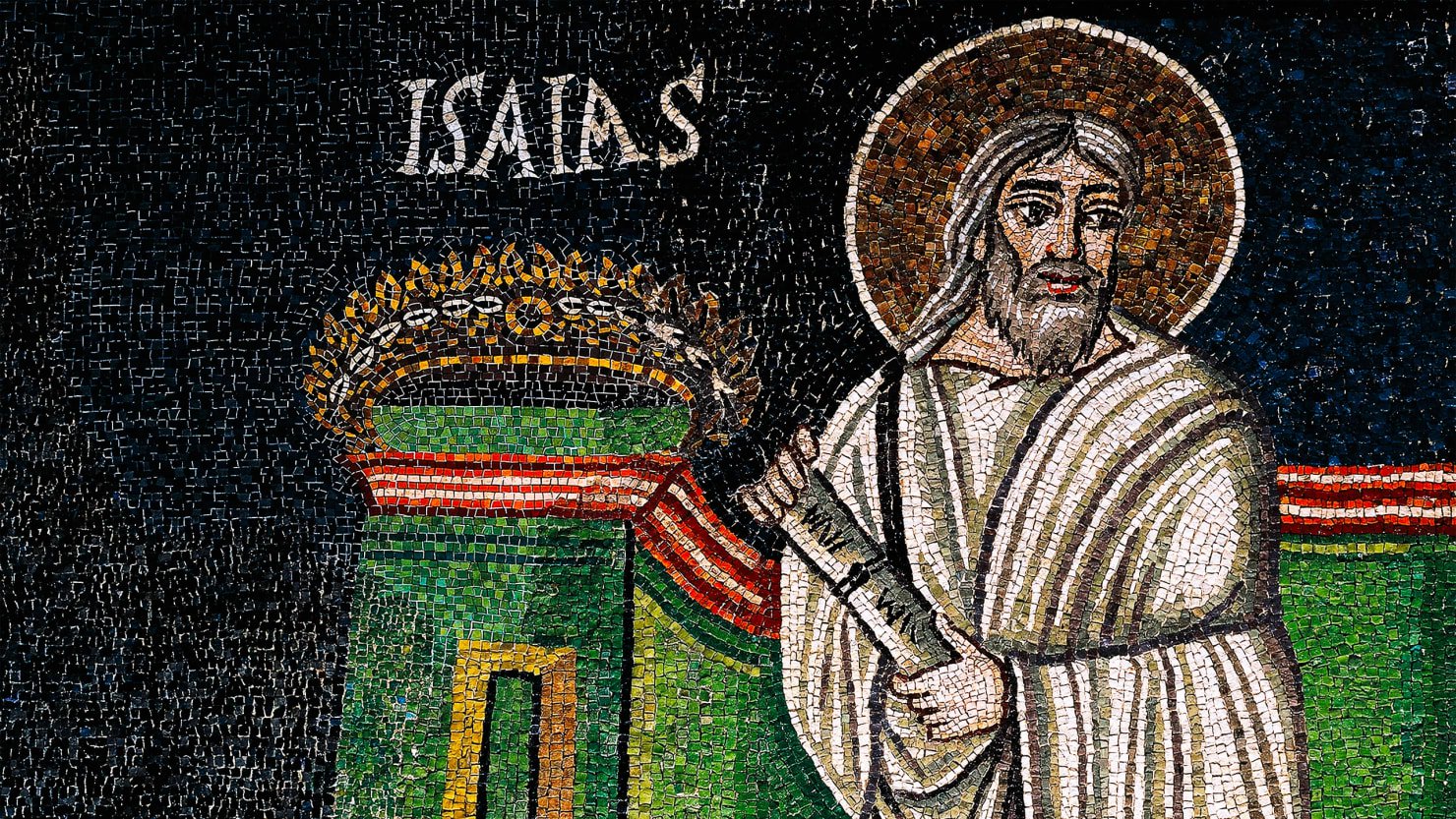
Second Isaiah (Chapters 40-55): A Brief Commentary


For the past two weeks I have been reading Isaiah 40-55 as a devotion. I wrote down my thoughts as I read.

Second Isaiah is breathtakingly amazing. It is an epic work of triumphant Yahweh. It's the unfolding of the plan to rescue creation. It is SO very important for how Jesus, Paul, and the early NT writers understood how God was fulfilling the promise to Abraham and rescuing creation through Jesus. You are really missing out on the meaning of Christianity if you don't understand this connection.

40:3 (Mark echoes it in his gospel 1:3). This is good news. The coming of Yahweh to his people. The Coming of Yahweh indicates that sins have been forgiven (40:2).

40:12-31. Clear statement of monotheism. Yahweh is the creator. Empires and nations come and go and are reduced to futility, but God endures forever. Yet, he is involved in history (vv. 23-24) and looks after those who hope in him (vv. 29-31).

Side note: Chapter 40 appears prominently in the film Chariots of Fire.
Side note: 40-41: I wonder if the author of Job 38-41 was inspired by these chapters.

41:2. Yahweh raises up Cyrus as the means of continuing the covenant. Cyrus' personal success is due to God's utility. Kings, nations, and empires are falling by the wayside of history, returning to dust, but Israel, the family of Abraham, remains. But only because their god is the creator God who is faithful to his covenant.

41:8-9. More on the covenant. Israel is the family of Abraham. They have been called to serve Yahweh. God has not rejected them despite their sin. Here the Servant is corporate Israel as a unified figure. Monotheism and election here.

Kings, nations, and empires are falling by the wayside of history, returning to dust, but Israel, the family of Abraham, remains. But only because their god is the creator God who is faithful to his covenant.

42. The first Servant Song. A chosen one. The spirit rests upon him. Non-violent figure. He will be faithful to the covenant. He will establish justice upon the whole earth, not just in Israel.

42:5-9. The creator god has called the Servant for the purpose of the covenant. He has made him a covenant. He is to be a light and redeemer to the world that is imprisoned within the darkness of powers of idolatry and false gods.

42:18-25. Yet the Servant (clearly Israel here) is blind to the truth and the reality of God's plans in history. Yahweh wished to be faithful to covenant and spread blessings, but Israel proved faithless. Instead, judgment came upon them.

43:1-7. But Yahweh still loves his people and will not leave them. He will bring the children of Israel together from around the world.

43:8-13. Israel is the proof and witness to the nations that Yahweh is the almighty creator God.

43:14-28. Yahweh destroys Babylon for the sake of Israel. A new Exodus is taking place. While Israel proved by their cultic practices that they did not honor their god, Yahweh will forgive their sins anyway for his purposes. Israel faced the cherem but was redeemed.

44:1-8. Yahweh, the creator god, who chose Israel, will renew his people like he will renew the land. The saving/renewal power of Yahweh will result in the nations wanting to become his followers and his people.

44:9-20. A polemic against idolatry. A brutal satire on the absurdity and futility of it. Sarcasm and ridicule. Swiftian. The idolater is one who is spiritually blind. He is led astray be a deluded mind. See the works of Walter Wink for connection between idolatry and delusion.

44:24-28. Again, Yahweh is the Lord of History. His ways confound the prognosticators yet sends interpretive words to his prophets. He determines the course of events. In this way, he had called Cyrus for his purposes to decree the rebuilding of Jerusalem.

45:1-13. The creator god uses the pagan Cyrus for his purposes, for his chosen people, for the covenant in order that Yahweh's name can be known throughout the world. Yahweh goes before Cyrus' armies (much like the Ark of the Covenant went before Israel's). Creation and history are continually being intertwined in these chapters. Yahweh is lord over both. He is bringing Israel out of physical exile, being faithful to the covenant, in order to bless the entire world.

45:14-25. The prophet predicts a religious conquest of the world. Yahweh is inviting all nations of the earth to share in the salvation of Israel. This is God's faithfulness to his covenant. But woe to the idolaters!

46:1-13. False gods are falling. Their idols lead only into captivity and exile. This is the state of the idolatrous. Yet, while people carry the idols of their false gods, Yahweh will carry his people. Deliverance is coming. Yahweh will establish his victory.

47:1-15. An oracle against Babylon about to meet its fall by Cyrus.

48:1-22. Israel has been unfaithful to Yahweh and his covenant, yet God has been patient for his own purposes. He has revealed the truth throughout Israel's history and will continue to do so. Yet Israel refuses to listen, Yet, liberation and restoration are in store. Yahweh is not governed by the conduct of Israel. The purpose of the punishments against Israel is to make it what election and covenant destined Israel to be. Yahweh notes the promise of offspring as numerous as the sand on the seashore (v. 19). This is a reference to the covenantal promise God gave to the patriarchs (Genesis 22:17; 32:12; cf. 15:5). Yahweh is saying that there is a historical purpose for the election of Israel and the covenant - to bless the nations. Israel has been faithless to that purpose, but God is going to honor the covenant for his purposes.

49:1-6. The Second Servant Song. Identity of the servant in some doubt among scholars. Possibly Israel. Possibly another figure whose identity fluctuates between himself and Israel. This servant will renew Israel and be used to bring salvation to the world. The mission of the servant to restore Israel but this is the lesser part of the mission. The fuller mission is a restoration of the world.

‏49:7-13. Again, the covenant for Israel is a medium for which Yahweh's revelation and salvation reach all nations. The powers of the world will bow before God.

49:14-26; 50:1-3. Some theodicy here. Israel is in despair over their circumstances. However, Yahweh has not forgotten Israel. He remains faithful. He has power over the nations and rulers of this world and they bend to his will. His power to destroy shows his power to build.

50:4-9. Third Servant Song. A prophetic figure. His mission grows more difficult, yet he won't respond to violence with violence or to insult with insult. Instead, Yahweh will vindicate the servant. The language is legal. The servant will be justified, declared righteous.

‏50:10-11. But those who do not hearken to the voice of the servant will not share in his vindication. You will not be justified, declared righteous.

51:1-23. Reference to the call of Abraham (v. 2), the Garden of Eden (v. 3), and the Exodus (v. 10). Possibly a reference to mythological incident and the blended imagery of creation and exodus against chaos (v. 9). Yahweh promises judgment, victory, deliverance, salvation to all the nations (vv. 4-8). Yahweh, the creator, promises to free the oppressed from the oppressor (v. 13-16)

52:1-12. A messenger brings Good News of peace and salvation. He announces the Kingdom of God (v. 7). Yahweh is returning to Zion (v. 8). The ends of the earth shall see salvation (v. 10).

52:13-15; 53:1-12. The Fourth Servant Song. The Servant is exalted but there is nothing to commend him. He has no beauty or attractiveness. A low, humble person. He bore people’s diseases and pain. Because of it, people thought him afflicted by God. He was wounded and crushed. A victim of a legal injustice. He is killed. Yahweh brings transgressions upon him so that his plan may succeed. The curse of the people come upon him. Yet, he is innocent. Despite death, he will experience long life. He is delivered from death. And he will deliver many. His is an atoning death. This is a saving act that is going to astonish the powers of the world. The suffering of the righteous becomes the medium of salvation.

54:1-17. The ancient sins of Israel are referred to. Israel is likened to an unfaithful wife. However, what might have been a divorce was merely a temporary separation. Now reconciliation has begun. This recalls the theology of Hosea. The reference to the barrenness of the wife (v. 1) recalls Sarah and the promise recalls Abraham (vv. 3, 10). There is also references to unbreakable covenants (vv. 9-10). The vision of the enduring Jerusalem approaches the eschatological. It is a community of the redeemed.

55:1-13. Yahweh invites everyone to eat and drink. Food and drink that will make people live. An eternal covenant will be made. The covenant will be made out of God’s love for David (possibly a reference to 2 Samuel 7:11-16 and Psalm 89). He will be a witness, a prince, a ruler of people. Those who don’t even know him will run to him. There is a call to everyone to come to Yahweh. Seek God, seek forgiveness. The creator god’s thoughts are beyond humanities. His saving purposes can grasped, but not its scope. Yahweh sends his Word out. The externalization of his person. It shall not come back unfulfilled. It will accomplish its mission. Instead of thorns and thistles, trees, bushes, and flowers will grow. A reversal of the curse of Eden.

Wednesday, April 11, 2018

Recommended Religious Reading List


Here is a recommended religious reading list:

*Top Ten in Bold

Cost of Discipleship – Dietrich Bonhoeffer
Transforming Mission – David Bosch
Dogmatics (vols. 1 and 2) – Emil Brunner
I and Thou – Martin Buber
The Book of Daniel (ABC) – Alexander A. Di Lella and Louis F. Hartman
The Message of Genesis – Ralph Elliott
Christian Theology – Millard Erickson
Communicating Christ Cross-Culturally – David Hesselgrave
Untamed: Reactivating a Missional Form of Discipleship - Alan Hirsch and Debra Hirsch
The One and the Many in the Israelite Conception of God - Aubrey Johnson
The Vitality of the Individual in the Thought of Ancient Israel - Aubrey Johnson
The Concept of Anxiety – Soren Kierkegaard
Concluding Unscientific Postscript - Soren Kierkegaard
Either/Or – Soren Kierkegaard
Fear and Trembling – Soren Kierkegaard
Philosophical Fragments – Soren Kierkegaard
Provocations: The Spiritual Writings of Soren Kierkegaard 
Mere Christianity – C. S. Lewis
The Baptist Heritage – Leon McBeth
Apostasy – Dale Moody
Word of Truth – Dale Moody
The Axioms of Religion – E.Y. Mullins
The Christian Religion in its Doctrinal Expression – E.Y. Mullins
Message and Mission – Eugene Nida
Customs and Culture – Eugene Nida
Nature and Destiny of Man – Reinhold Niebuhr
A Literary Approach to the New Testament – John Paul Pritchard
Word Pictures in the New Testament, Vols. I-VI – A.T. Robertson
Corporate Personality in Ancient Israel – H. Wheeler Robinson
Understanding Genesis – Nahum Sarna
New Testament Theology - Frank Stagg
The Polarities of Human Existence in Biblical Perspective – Frank Stagg
Can We Do That? – Andy Stanley and Ed Young
AquaChurch – Leonard Sweet
Soul Tsunami – Leonard Sweet
Blinded by Might – Carl Thomas and Ed Dobson
The Powers Trilogy - Walter Wink
The Challenge of Jesus - N.T. Wright
The Day the Revolution Began - N.T. Wright
How God Became King - N.T. Wright
Jesus and the Victory of God - N.T. Wright
Justification – N.T. Wright
The New Testament and the People of God – N.T. Wright
Paul and the Faithfulness of God – N.T. Wright
The Resurrection of the Son of God - N.T. Wright
The Creative Leader - Ed Young


Wednesday, February 28, 2018

Natural Evil and the Death of Animals


Natural evil is evil for which no non-divine agent can be held morally responsible for its occurrence. Examples include the sufferings resulting from earthquakes, hurricanes, tornadoes, and other natural disasters. The idea is that these events are bad but cannot be blamed on the moral lapses of Man. Some Christians believe that such environmental phenomena are the result of the Fall of Man and would not have occurred in an unfallen world as God originally intended. The point of this article is not to critique this overall theory but to confine myself to a specific subset of it.

One of the primary results of the Fall of Man - as told in the story of Genesis 3 - was that humanity was prevented from accessing the fruit of the Tree of Life. The idea is that God had intended humanity to live forever by eating this fruit (Genesis 3:22), but disobedience and sin put a break on that intention. The result was humanity’s descension into corruption and death (Genesis 2:16; 3:3, 19). Death then reigned through humanity until the resurrection of Jesus (Romans 5:12-21). Eventually, death will be completely defeated (1 Corinthians 15:26, 54-55; Revelation 20:14; 21:4). At that time, those who are believers in Jesus will be resurrected into incorruptible, physical bodies that are immune to decay and death (Romans 5:17, 21; 6:4-9, 23; 1 Corinthians 15:21, 54; 2 Corinthians 1:10; Revelation 20:6; 21:4).

Importantly, the biblical verses concerning death and its solution explicitly do so with regards to humanity. Death is the inevitable result of sin, but life comes from God through Jesus the Christ (Romans 6:23). However, despite this explicit human death context, there are those who argue that the references to death implicitly refer to death in creation. The idea is that all death, including the death of animals, is the result of the Fall of Man. In this thinking, if Man had not originally sinned, animals would not die. Furthermore, if animals would not die, then humans would not have killed animals and animals would not kill animals. The corollary to this interpretation, obviously, is that animals would not kill other animals for food. Presumably, they would kill plants for food.

I specifically remember a well-known evangelical leader writing an article a decade ago about his experiences watching the Discovery Channel. He noted a scene in one nature show showing a python swallowing a pig whole. He concluded that such a scenario could not have been God’s original intention for his creation. But is his conclusion correct? It seemed to be based more on subjective feelings of disgust rather than on sound Biblical theology. Can we use the Bible to learn whether God intended animals to kill other animals for food?

I think the clearest Biblical answer comes from Psalm 104. This is a psalm of praise to God, specifically identifying his greatness as Creator. God is majestic because he has created a wonderfully good and ordered world. And in and through this ordered world, God cares for the sustenance of his living creatures.

“He sends forth springs in the valleys;
They flow between the mountains;
They give drink to every beast of the field;
The wild donkeys quench their thirst.” (vv. 10-11)

“He causes the grass to grow for the cattle” (v. 14)

Then we have these important verses:

“You appoint darkness and it becomes night,
In which all the beasts of the forest prowl about.
The young lions roar after their prey
And seek their food from God.” (vv. 20-21)

 These two verses are followed by the following:

“O LORD, how many are Your works!
In wisdom You have made them all;
The earth is full of Your possessions.
There is the sea, great and broad,
In which are swarms without number,
Animals both small and great.

They all wait for You
To give them their food in due season.
You give to them, they gather it up;
You open Your hand, they are satisfied with good.” (vv. 24-25, 27-28)

What verses 20-21 explicitly state is that young lions seek other animals to eat for food and that this process is from God. While verse 14 indicates that God ordered his good and wondrous creation so that some animals should be fed on the plants of the earth, verses 20-21 indicate God orders this same creation so that other animals will devour other creatures for their food. Animals eating other animals is a part of God’s good and ordered intention for his created world.

I made this argument more than a decade ago, reasoning through my observations of how God created animals.

“Examine the carnivore animals of God’s creation: lions, cheetahs, eagles, bear, vultures, wolves, sharks, etc. They are designed by God to hunt and kill other animals. The teeth, the claws, the speed, and the senses – it is all designed to find, chase down, kill, tear apart and devour other animals. Examine many of the animals of God’s creation that are hunted by carnivores: deer, skunks, porcupines, elephants, rhinoceroses, fish, lizards, rabbits, etc. They are designed by God to escape, defend, and hide from other animals. The camouflage, the speed, the defensive capabilities are a part of their being. These capabilities assume a life of potential death and the ability to kill and avoid being killed.”

The teachings of Scripture indicate that God always intended for animals to prey on each other and that this process is a part of his good and ordered creation. Casual observation of that created order confirms this interpretation of Scripture. Working backwards from this corollary, we can then infer that God does not have a problem with the death of animals in his good creation, and that the death of animals is not a result of the Fall of Man. Instead, the death that resulted from the humanity’s sin was specifically concerned with that of human beings created in the image of God. This being the case, whatever we think about natural evil, it should generally exclude the death of animals.

Wednesday, February 14, 2018

Why do Christians Believe that Jesus is the Only Means of Salvation?


The great scandal of Christianity in the Western, postmodern age is the fundamental, exclusivist claim that salvation, both individually and corporately, can only be found in allegiance to Jesus the Christ. This is a foundational claim of Christianity and has endured through the millennia, even in times and places of great persecution. In the early centuries of Christianity, coming into prominence in the Greco-Roman world of polytheism, Christians maintained the truth that “Jesus is Lord” and that their only allegiance was to him and no other god, including Caesar. For this abiding principle they faced torture, death, and persecution. After Christianity became the de facto religion of Western civilization, the issue of the Faith’s exclusivity became less central through general acceptance of the truth. During the Enlightenment period and early modernity, many philosophers and religious thinkers began to see Christianity more as the highest ideal of an evolving naturalistic religion rather than as a faith inherently separate from all others. This view weakened the exclusive claims of Christ, setting Jesus up as the highest and noblest truth to be followed rather than as central to salvation. Later modernity focused more on whether the claims of Christianity were true or not. By the time of post-modernity, the questions had devolved even further. The idea of truth (highest or otherwise) was no longer pertinent. Now, all religious faith traditions were of equal value and none had an exclusive claim to the truth. Salvation was said to be found in any faith, or no faith … whatever. Nevertheless, the millennia claim of Christ’s exclusivity remains. It is central to the Faith and how creation works.

I believe the primary reason many people object to the exclusive claims of Jesus is they think the means of salvation are arbitrary and not inextricably linked to objective reality. People tend to think religion is a purely subjective experience and, thus, that all such experiences are basically the same. But are they? If so, how do we know? Should the atheistic paganism of Hitler’s extermination of six million Jews be given the same salvific value as the Christian monk who gives up all his possessions to help the poor? If so, then God has certainly created a random universe without order or justice. Unless we are going to advocate for a universal salvation for everyone irrespective of their deeds, then there must be some form of exclusivity involved. Who then is excluded? A person who believes in God but commits horrific, murderous crimes? An atheist who lives a moral life? A person whose life has been 50% good and 50% bad? Where is the tipping point? What is the standard? Is there an objective principle by which someone is said to be “saved”? Christianity has always stated that, yes, there is an objective standard to reality and salvation, and it is Jesus the Christ. For example:

“Jesus said to him, ‘I am the way, and the truth, and the life. No one comes to the Father except through me.’” (John 14:6)

“And there is salvation in no one else, for there is no other name under heaven given among men by which we must be saved.” (Acts 4:12)

“For God so loved the world, that he gave his only Son, that whoever believes in him should not perish but have eternal life.” (John 3:16)

“For there is one God, and there is one mediator between God and men, the man Christ Jesus,” (1 Timothy 2:5)

“Whoever believes in the Son has eternal life; whoever does not obey the Son shall not see life, but the wrath of God remains on him.” (John 3:36)

“Because, if you confess with your mouth that Jesus is Lord and believe in your heart that God raised him from the dead, you will be saved.” (Romans 10:9)

“I told you that you would die in your sins, for unless you believe that I am he you will die in your sins.” (John 8:24)

“Whoever believes in him is not condemned, but whoever does not believe is condemned already, because he has not believed in the name of the only Son of God.” (John 3:18)

“That all may honor the Son, just as they honor the Father. Whoever does not honor the Son does not honor the Father who sent him.” (John 5:23)

“And this is the testimony, that God gave us eternal life, and this life is in his Son. Whoever has the Son has life; whoever does not have the Son of God does not have life.” (1 John 5:11-12)

“No one who denies the Son has the Father. Whoever confesses the Son has the Father also.” (1 John 2:23)

“So everyone who acknowledges me before men, I also will acknowledge before my Father who is in heaven, but whoever denies me before men, I also will deny before my Father who is in heaven.” (Matthew 10:32-33)

“Everyone who goes on ahead and does not abide in the teaching of Christ, does not have God. Whoever abides in the teaching has both the Father and the Son.” (2 John 1:9)

Then there are these other verses: John 3:3; Matthew 25:41; Isaiah 44:6; 2 Corinthians 5:17; Matthew 7:13-14; Ephesians 2:1-22; Acts 16:31; Romans 6:23; Romans 5:1-21; Matthew 7:23; Acts 13:38-39; John 17:3; Hebrews 7:25; John 6:35; John 11:25; John 8:51; John 6:50-51; Matthew 11:27; 1 Corinthians 8:6; 1 John 1:7; Ephesians 2:18

Then there are dozens more passages that speak of Christ’s centrality in creation, his unique relationship with God, and his supreme Lordship over all the world and everything in it. This last point is particularly important. It makes the claim that Jesus is the one true King of this world and that he is currently ruling it (Matthew 22:44; 26:64; Acts 2:33; 7:55-56; Romans 8:34; Ephesians 1:20-23; Colossians 3:1; Hebrews 1:3; 8:1; 10:12; 12:2; 1 Peter 3:22; Revelation 3:21; Psalm 110:1).

When the early Christians proclaimed that “Jesus is Lord” they were not simply asserting his divinity. They were also asserting a counter-claim to the prevailing culture. In the early Greco-Roman world, the emperor was the kyrios, the lord of the world, the one who claimed the allegiance and loyalty of subjects throughout his wide empire. The early Christians insisted that Jesus’ messiahship and divine sonship were validated by his resurrection, and, thus, he was the Lord, the kyrios, of the whole world. The believed their task was to bring the world, all the nations, into loyal allegiance — hypakoē pisteos, the obedience of faith — to this universal Lord.

Faith/belief, then, is not an abstraction devoid of content or context. The Faith that indicates salvation has a specific content: Jesus as Lord.

“If you confess with your mouth that Jesus is Lord and believe in your heart that God raised him from the dead, you will be saved” (Romans 10:9).

"Believe in the Lord Jesus, and you will be saved, you and your household." (Acts 16:31)

See also Luke 8:12; John 1:12; 3:15-18; 3:36; 5:24; 6:40; 8:24; 20:31; Acts 10:43; 13:39; Mark 16:16; Luke 7:50; Hebrews 4:3.

This is the reason the early Christians followed Jesus commission to go into the world to make disciples (Matthew 28:18-20), specifically based on the fact Jesus had all authority over the world (v. 18). This is the reason they preached the good news to unbelieving Jews, including pagan gentiles (Acts 13:47; 28:28). Paul himself says, “We have received grace and apostleship to bring about the obedience of faith among all the Gentiles for His name's sake” (Romans 1:5).

The early Christians also believed that Gentiles becoming obedient believers was the fulfillment of Old Testament prophecy (Deuteronomy 32:43; Psalm 18:49, 22:27; 117:1; Isaiah 11:10; 42:4; 49:6; 56:1-8; 60:1-3; Jeremiah 16:19-21; Zechariah 2:11; Malachi 1:11; cf. Romans 15:9-12). These prophecies stem all the way from the calling of Abraham: “And in you all the families of the earth will be blessed” (Genesis 12:3; 17). Following the Fall of Man (Genesis 3) and the splintering of humanity, God called Abraham and appointed Israel as the means by which he would save the world and create one family of both Jews and Gentile believers. The book of Galatians is about this one family God has created through Jesus and those who believe, both Jews and Gentiles (3:3, 5-9, 22-29; 5:5-6). This is why Paul, in the book of Romans, mourns that so many of his contemporary Jews did not believe and did not have salvation because they rejected Jesus as Lord (9:30-10:21).

Again, Jesus’ “Lordship” is not simply a claim of divinity but an assertion of Jesus’ claim to be the Messiah, the King of the Jews, and the one, true ruler of the of the world (Psalm 110:1; Matthew 22:44). The Four Gospels themselves are stories that tell how Jesus became King. The Good News is about the arrival of the Kingdom of God (Matt 4:23; 9:35; 24:14; Mark 1:14). The Kingdom of God is the rule and will of God on this earth, reversing the curse of the Fall of Man (see Romans 5:12-21). People are called to turn away (repent) of their sins and have that obedient faith, that allegiance to Jesus, the one true ruler of the world. Salvation comes from allegiance to Christ. Those who do not have allegiance to Christ are judged condemned. As John writes:

“For God did not send the Son into the world to judge the world, but that the world might be saved through Him. He who believes in Him is not judged; he who does not believe has been judged already, because he has not believed in the name of the only begotten Son of God” (John 3:17-18).

Yet, the choice to believe and accept Jesus as Lord is open to all who hear the Gospel.

I write all this to simply show what early Christians believed about the exclusivity of Jesus. It is Jesus’ Lordship and our required allegiance to him that necessitates that exclusivity. This is why contemporary Christians believe that only Christianity, and no other faith tradition, provides salvation.

Again, this summation is all very basic and general. One can go deeper and speak about how this allegiance to Jesus works towards our salvation. Then we are talking about the concept of “headship”, incorporation, what it means to be the Messiah/Christ, and how what one says about the Christ can be said about his followers. That also brings into the discussion “the faithful obedience of Christ”, how it led to his resurrection/salvation, and how his followers are to have that same kind of faith to experience resurrection/salvation. Then, if one wants to go even deeper than that, one can talk about the ancient Hebrew conception of anthropology and how it formed the basis for understanding their religion. This understanding formed the basis and rationale for pertinent Judeo-Christian theological concepts. Even then, one can begin studying the biological development of the psyche in primitive humans to understand how ancient Hebrews arrived at their anthropological/theological conclusions. This is one of my current areas of study. I mention all this latter depth in brief only to emphasize that the Christian concept of the exclusivity of Christ to salvation is not an arbitrary belief but derived from something for more fundamental to humans.

This is why the exclusivity of Christ can never be divorced or downplayed in Christianity. His role in creation, salvation, judgment, and resurrection is central to the Faith. His crucifixion and resurrection are the linchpins that hold the religion and the history of the world together. Without the exclusivity of Christ there can be no salvation.